Why Do FKM Rubber Gaskets Fail in Chemical Processing Equipment?
In chemical processing equipment, regular rubber materials are hardly able to keep their performance stable in the long run after continuous exposure to strong acids, strong alkalis, organic solvents, high-temperature media, and corrosive gases, etc. Even if the design of the equipment may be very advanced, leakage problems can hardly be avoided if the sealing material is not properly selected
Common Causes of FKM Rubber Gasket Failure in Chemical Equipment:
1. Material swelling caused by chemical media corrosion.
Generally, rubber gaskets are liable to experience volumetric swelling when they come into contact with media like fuels, hydraulic fluids, or acidic and alkaline solutions. When the medium impregnates the rubber, it destroys the material structure. Besides, gasket dimensions change, and the ability to recover after compression decreases, which may lead to the seal breaking.
2. Accelerated rubber aging due to high temperatures.
When temperatures in reactors, heat exchangers, or piping are very high and sustained over long periods, the breakdown of rubber's molecular chains is thus significantly accelerated. If the material is heated beyond its limit, it will suffer hardening, cracking, and a permanent compression set, losing its function to seal in the end.
3. Material degradation caused by strong acids and alkalis.
Extremely corrosive media, including sulfuric acid, nitric acid, hydrochloric acid, and sodium hydroxide,are always attacking the rubber surface. Long periods of exposure cause the formation of cracks on the surface of the material, after that, the material breaks down and tensile strength is reduced. The result is a shorter lifespan of the product.
4. Attack by organic solvents.
Chemical industry substances such as benzene, toluene, xylene, acetone, and various fuel oils can rapidly permeate ordinary rubber. This causes the gasket to swell and increase in thickness, leading to seal failure.
5. Permanent compression set.
Still, even without major corrosion, rubber gaskets exposed to high-pressure conditions for a long time may become non-resilient. After turning off the device, the gasket will not go back to its initial thickness, causing leakages when the device is turned on again. This situation becomes even more serious if the operating conditions are at high temperature and high pressure.
Why Do Ordinary Rubber Gaskets Struggle to Meet the Demands of the Chemical Industry?
Material Type | Key Advantages | Disadvantages | Applicable Media |
Natural Rubber (NR) | Good elasticity, high mechanical strength, low cost | Poor resistance to oil and solvents; poor aging resistance | Water, certain mildly corrosive media |
| Ethylene Propylene Diene Monomer (EPDM) | Excellent resistance to water vapor, ozone, and weathering | Not resistant to mineral oils, fuels, or most organic solvents | Hot water, steam, weak acids and alkalis |
Nitrile Rubber (NBR) | Excellent oil resistance, moderate cost | Limited resistance to strong acids, strong alkalis, and certain organic solvents | Lubricating oil, hydraulic oil, fuel oil |
| Fluoroelastomer (FKM) | Excellent resistance to high temperatures, oil, acids/alkalis, and organic solvents | Relatively high cost | Petroleum products, chemical solvents, acidic and alkaline media, corrosive gases |
NR, EPDM, and NBR each work well in their own ways and settings, but complex chemical media exposure can be what limits them.
While EPDM is good to some extent for resistance to steam, it is not very strong against oils and organic solvents. In contrast, NBR is excellent in oil resistance but its quality can be compromised if it comes into contact with highly corrosive media for a long time.
On the other hand, FKM rubber gaskets, with their outstanding chemical and high-temperature resistance along with very low compression set, can still maintain the seal even after a long period of time, when they are exposed to very aggressive chemical environments. Therefore, they have been dominating the market as the top choice of sealing materials that are used in chemical processing equipment, petrochemical facilities, pharmaceutical machinery, and fluid transport systems.
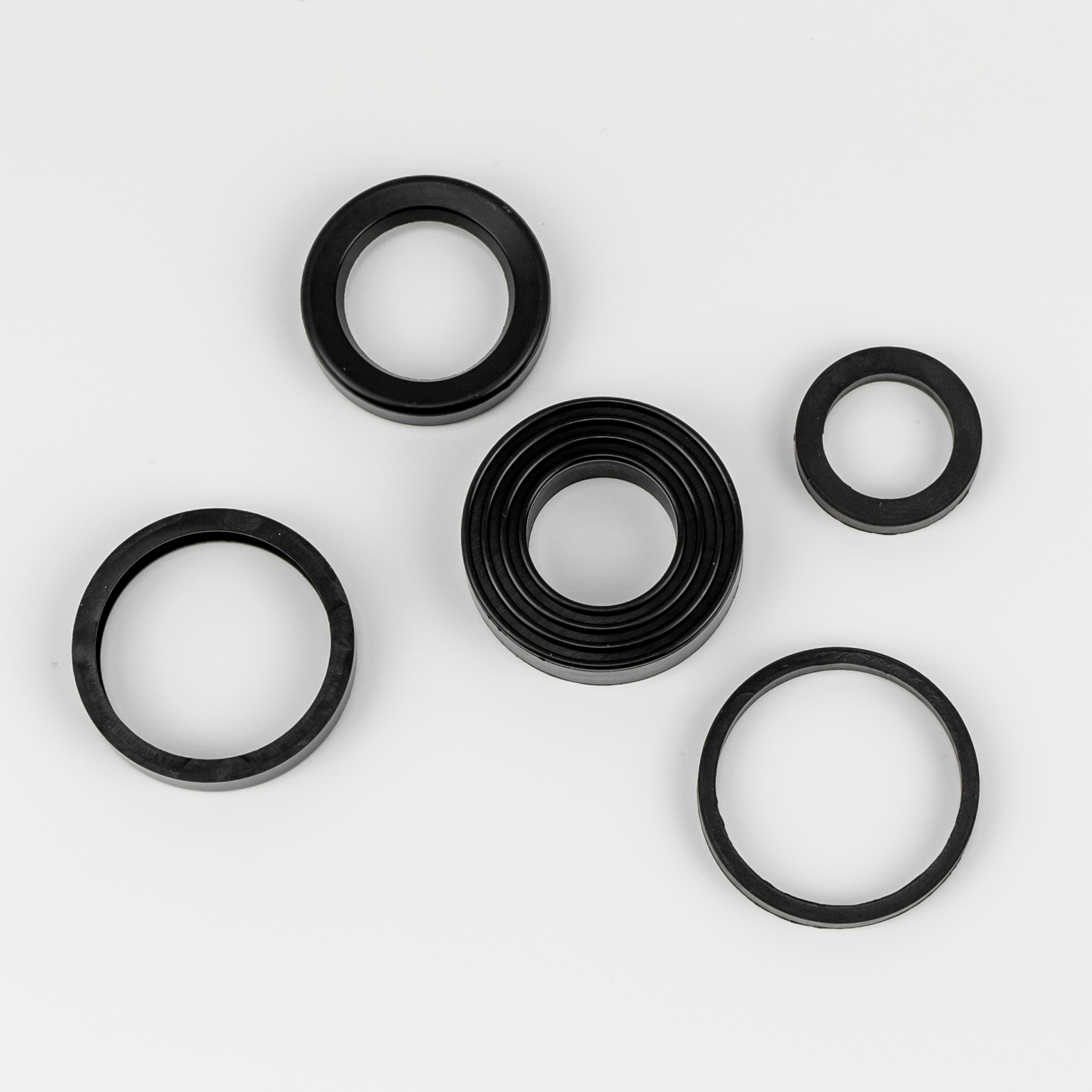
Which Chemical Processing Applications Are Suitable for FKM Rubber Gaskets?
1. Chemical reactors: Involving long-term exposure to corrosive media.
2. Chemical pipeline flanges: Requiring stable, long-term sealing.
3. Pump and valve systems: Subjected to high pressure and chemical media.
4. Storage tanks: Preventing the leakage of volatile media.
5. Petrochemical equipment: Demanding high resistance to oil and heat.
Consider the Lifecycle Cost of FKM Rubber Gaskets.
FKM gaskets come with a higher price per unit; however, when looking at the bigger picture, the costs tend to be less because of longer maintenance intervals. Also, in case of equipment that is regularly exposed to corrosive media, high temperatures, or organic solvents, the selection of chemically resistant FKM rubber gaskets is a way to not only improve equipment reliability but also lower total costs.