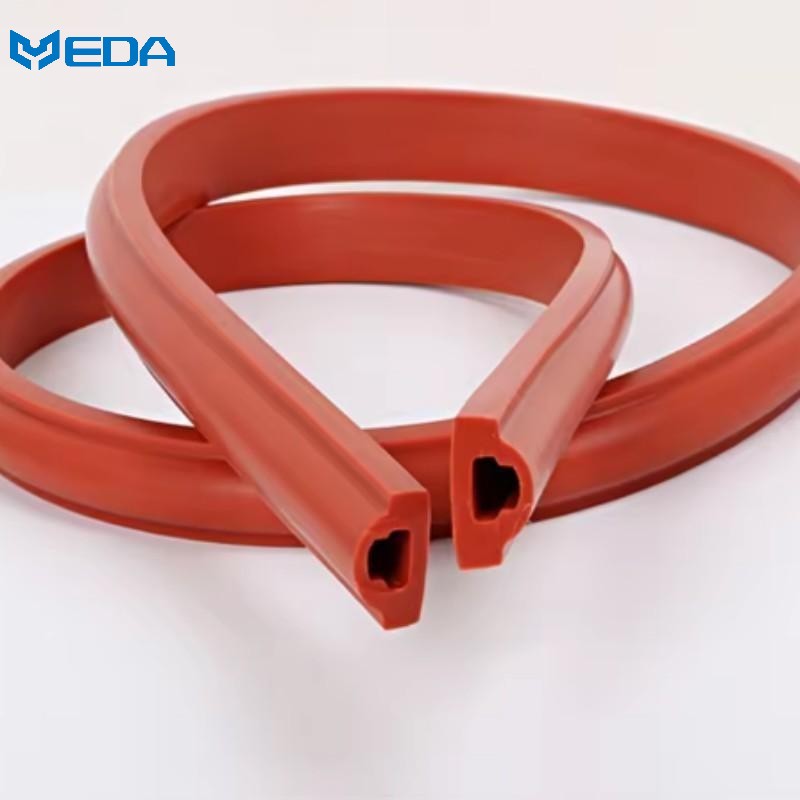
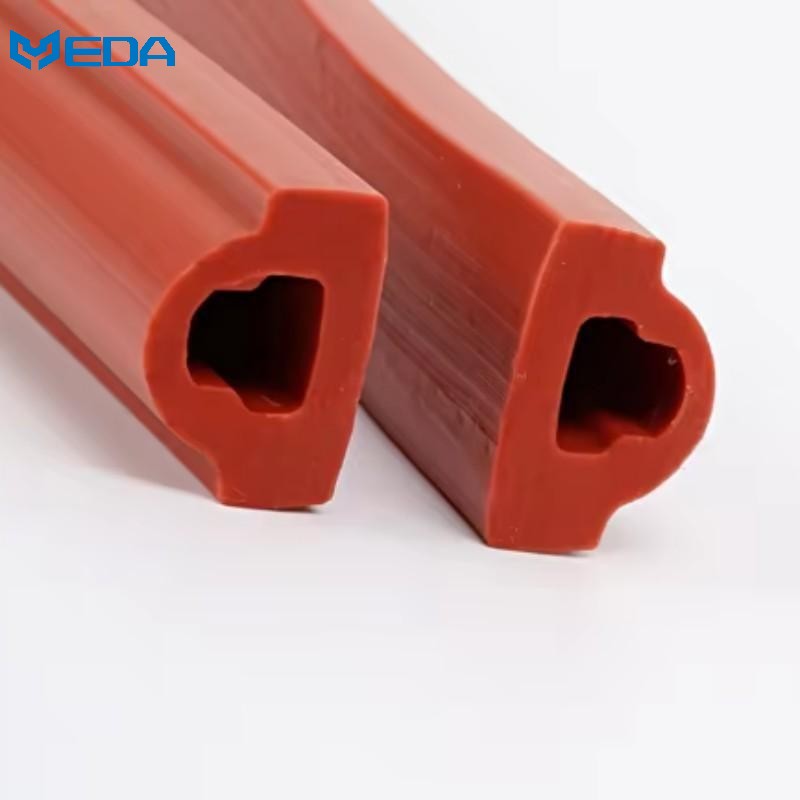
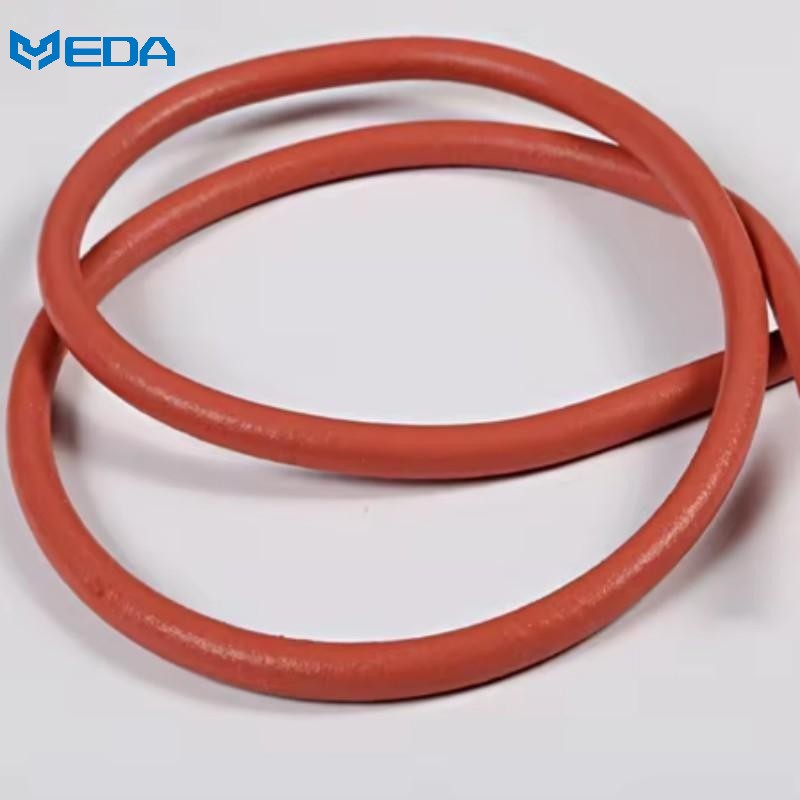
Flexible Silicone Rubber Strip

- YiDa
- Dalian,China
- 15-20 days
- 2 billion/year
1. Silicone rubber strips can keep up their sealing efficiency for a very long time covering a wide temperature range from -60℃ to 250℃.
2. Heat resistant silicone rubber sealing strips come with great features like high resilience and quick recovery, minimal compression set, and besides being slip resistant, they are also wear resistant.
3. The silicone rubber strip rolls are manufactured from eco-friendly silicone substance that meets the standards of RoHS 2.0 and REACH, and hardly have any irritating smell at all.
 Many buyers, while choosing silicone rubber strips, primarily focus on price and hardness but overlook other vital factors that influence the lifespan of a seal, namely compression set and tear strength. This results in scenarios where samples perform well in tests but the seals fail just a few months after the mass installation.
In order to solve this problem, the silicone rubber strip rolls we designed have a tensile strength ≥5 MPa, elongation at break ≥300%, and compression resilience ≥85%. The main advantages of this product are that it quickly returns to its original shape, it does not get deformed or collapsed even if it is under long-term pressure, and it has a good sealing performance that lasts.
Introduction to Silicone Rubber Strips:
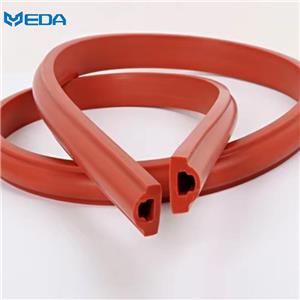
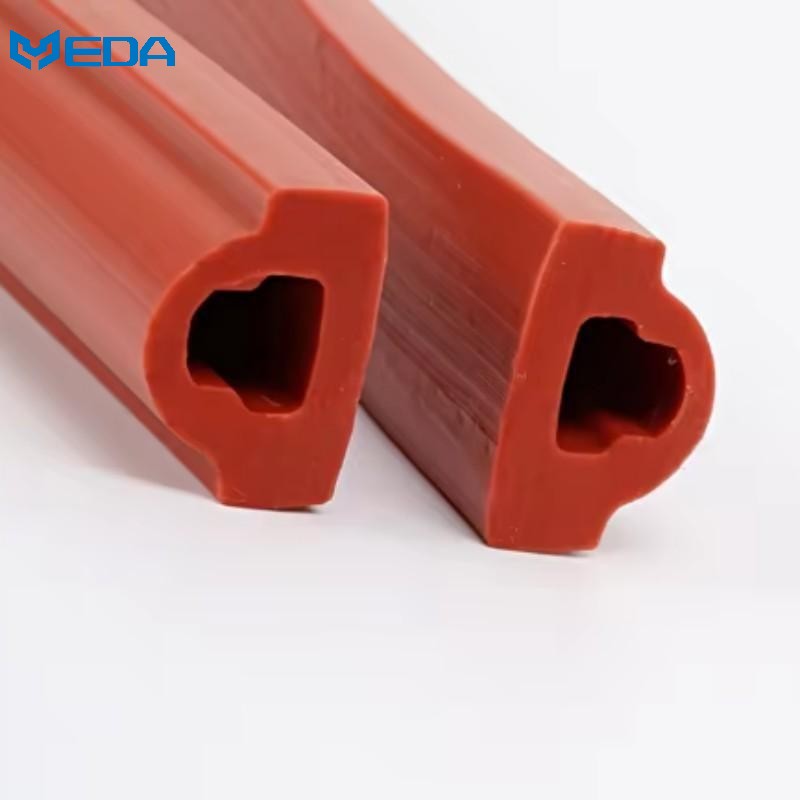
High temperature silicone rubber strips are simply long, bendable seals made of high-purity silicone rubber by extrusion or compression molding. They have very notable features including ultra-flexibility, resistance to exceptionally high temperatures and extremely low temperatures, environmentally friendly, insulating, and aging resistant, for instance, in industrial equipment, automotive, food processing, and medical equipment areas.
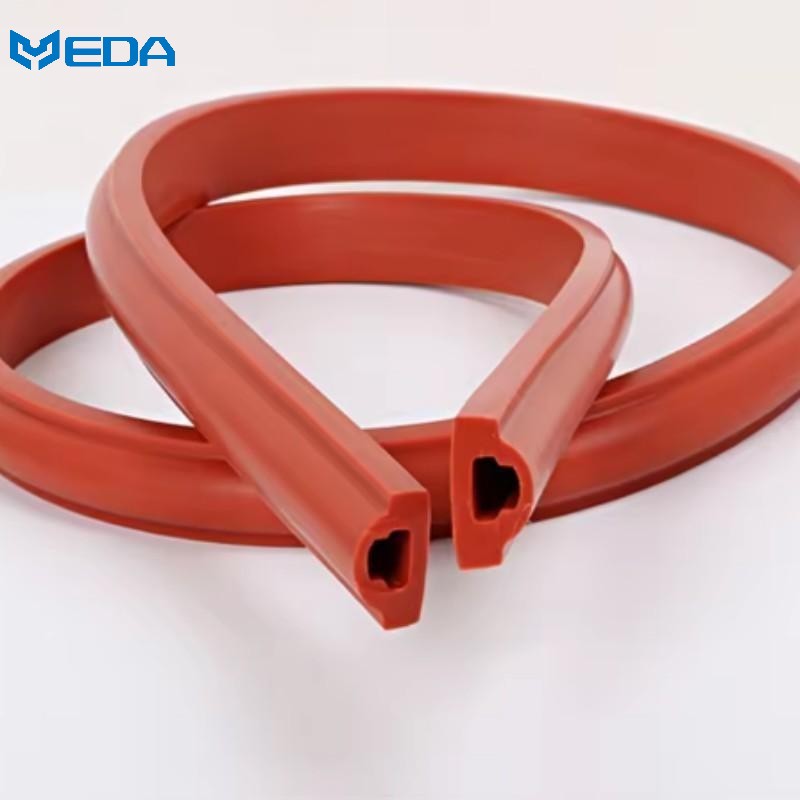
Parameters of Heat Resistant Silicone Rubber Seal Strip:
Item | Parameter/Option |
| Material | High-purity silicone rubber; customizable: FDA food-grade, medical-grade, flame-retardant, conductive |
Hardness | Shore A 5–80; commonly A20–50 |
Temperature Range | -60℃ to +250℃; short-term 280℃, depends on formulation and working conditions |
| Tensile Strength | ≥5MPa, meets most sealing application requirements |
| Tear Strength | ≥20kN/m |
Elongation at Break | ≥300% |
| Compression Rebound Rate | ≥85% |
| Compression Set | <10% at 70℃×22h |
Environmental Standards | Compliant with ROHS 2.0, REACH |
| Weatherability | Resistant to UV, ozone, acids, alkalis, and oils |
Volume Resistivity | ≥10¹⁴ Ω·cm |
| Dielectric Strength | ≥20kV/mm |
Flame Retardant Rating | UL94 V-0 flame-retardant formulation available upon request |
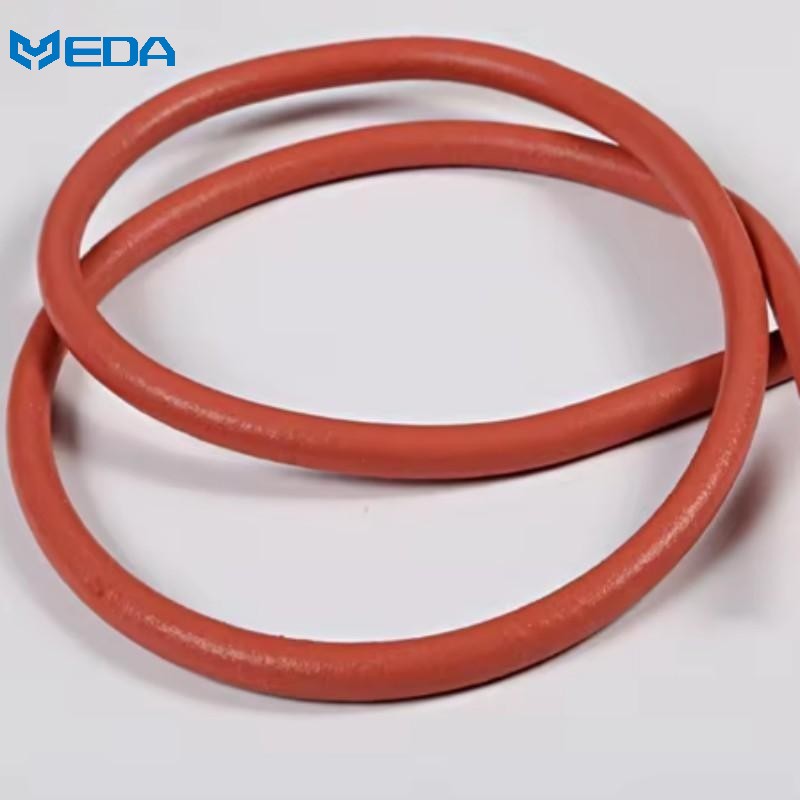
| Cross-Sectional Shape | Square, rectangular, round, and special shapes; custom mold available |
Thickness | 1–50mm, customizable |
| Width | 3–100mm, customizable |
| Length | 1–50m per roll, cuttable |
Color | Black, white, red, blue, etc.; customizable |
| Tolerance | ±0.30mm, depends on size and machining precision |
Applicable Media | Suitable for water, dilute acids, dilute alkalis, salt aqueous solutions, alcohols (e.g., ethanol), air, ozone, and similar environments |
As per drawings or samples, we support full-dimensional customization including irregular cross-sections, special hardness, specified colors, and process requirements such as adhesive backing or foaming.
Why choose our High Temperature Silicone Rubber Strips?
1. Flexibility and Resilience.
Usually, to cut down costs, many silicone strip manufacturers use high quantities of silica or recycled rubber. This makes the material harder and less elastic. When subjected to pressure or vibration over a long period, they will have a high compression set.
We make our silicone rubber strips from high-purity silicone rubber. Hardness can be as low as Shore 5A, while the compression set is ≥85%. In other words, it can still have excellent resilience upon release after being exposed to high temperature and pressure continuously.
2. High and Low Temperature Resistance.
Regular rubber normally can withstand temperature changes in the range of -30℃ to 120℃. However, it gets cracks when exposed to extremely low temperatures and at the same time it easily gets softened if exposed to high temperatures.
Our silicone rubber strip rolls are capable of operating at temperatures of around -60℃ to 250℃. At these temperature levels, they can normally retain their elasticity and not give off any toxins.
3. Environmental Protection and Insulation Safety.
Some cheap silicone rubber strips might be made of industrial-grade non-food contact materials that have a very strong smell and release small molecules when heated that can contaminate delicate internal parts and cause the corrosion of the circuit board.
Our silicone rubber strip roll is made of green silicone materials that fully satisfy the RoHS 2.0 and REACH standards and do not have a strong annoying smell. It is suitable for sealing food machinery, making cushions for medical equipment, and insulating high-voltage that it can ensure the safety of the users and also help in preventing leakage and contamination.
4. Aging Resistance and Weather Resistance.
Regular silicone strips in a place where they will be exposed to UV rays, ozone, acids, alkalis, or oil will become cracked, sticky, and less elastic in 2-3 years.
Our heat resistant silicone rubber seal strip is so strong that it can resist the sun's ultraviolet rays, ozone, acids, alkalis, and even oil. In a controlled experiment of ultraviolet aging, it showed amazing ability to withstand the weather (the exact duration of its life depends on the working conditions).
What Are the Application Scenarios for Silicone Rubber Strips?
1. Automotive Industry: Door and window sealing, safeguarding engine wiring harnesses, dashboard shock proofing, making sunroofs waterproof.
2. Industrial Equipment: Sealing of machinery enclosures, protecting cabinets from dust and water, flexible connection of pipes, using foam for cushioning of mold.
3. Food and Medical: Sealing of oven doors, sealing of kitchenware, cushioning of medical devices, sealing of pharmaceutical equipment.
4. Construction Elements: Sealing with PVC for windows, insulating wooden doors against noise and dust, using waterproof sealing strips for sunrooms.
5. Electronics and Electrical: Screen impact resistant to the display, insulation of the circuit board, sealing the charging pile, fixing and protecting the cable.
Yida Rubber's Strength:
Since our establishment in 2006, we have expanded into a large-scale manufacturing company occupying 37,000 sqm and having 450 employees. Our crew totals 30 years of collective production knowledge, and the annual output of the company is over 20 billion pieces. Delivery of standard-sized items can be made within 15 days after the order has been finalized.
International Cooperation:
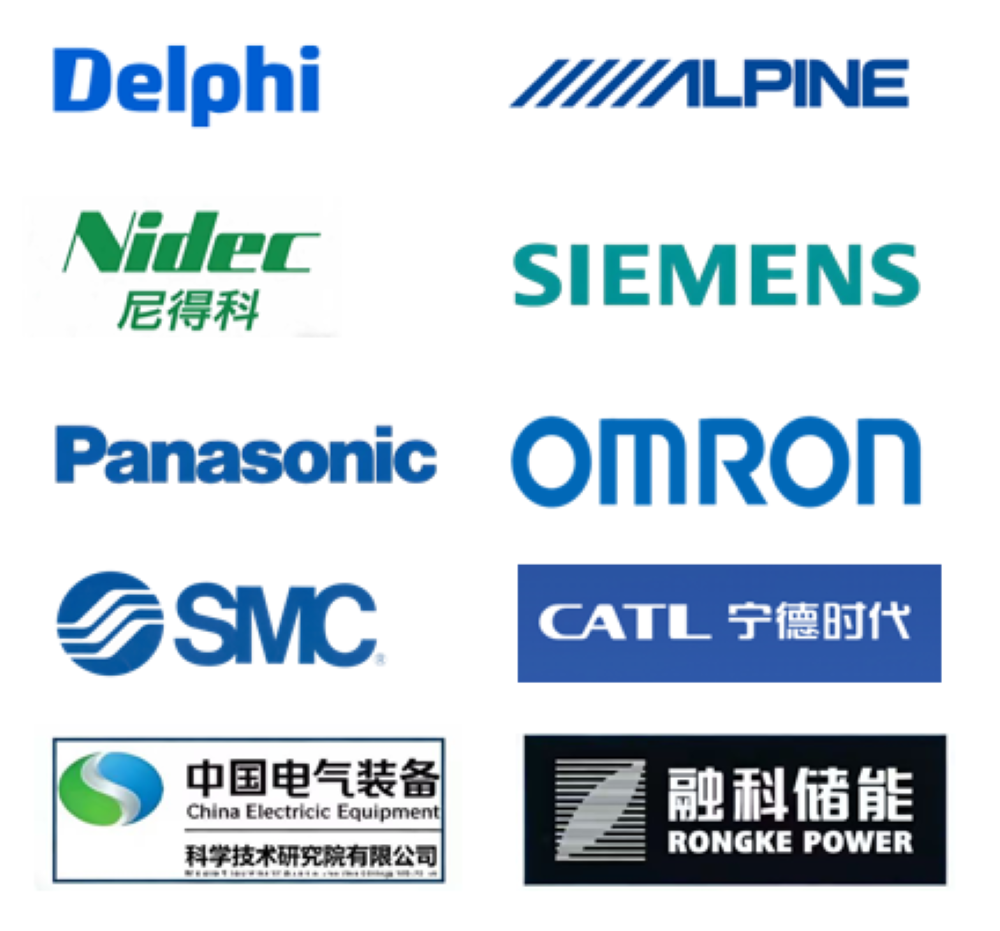
We through the years have been working hand in hand with highly recognized international brands like SMC, Omron, Siemens, and Panasonic and have at the same time been recognized with awards such as the "2023 Excellent Supplier" from SMC and the "Global Strategic Partner Certificate" from Omron. The majority of our products are shipped to the US, South Korea, Switzerland, Saudi Arabia, and many countries and regions of Southeast Asia and Europe.
Quality Assurance:
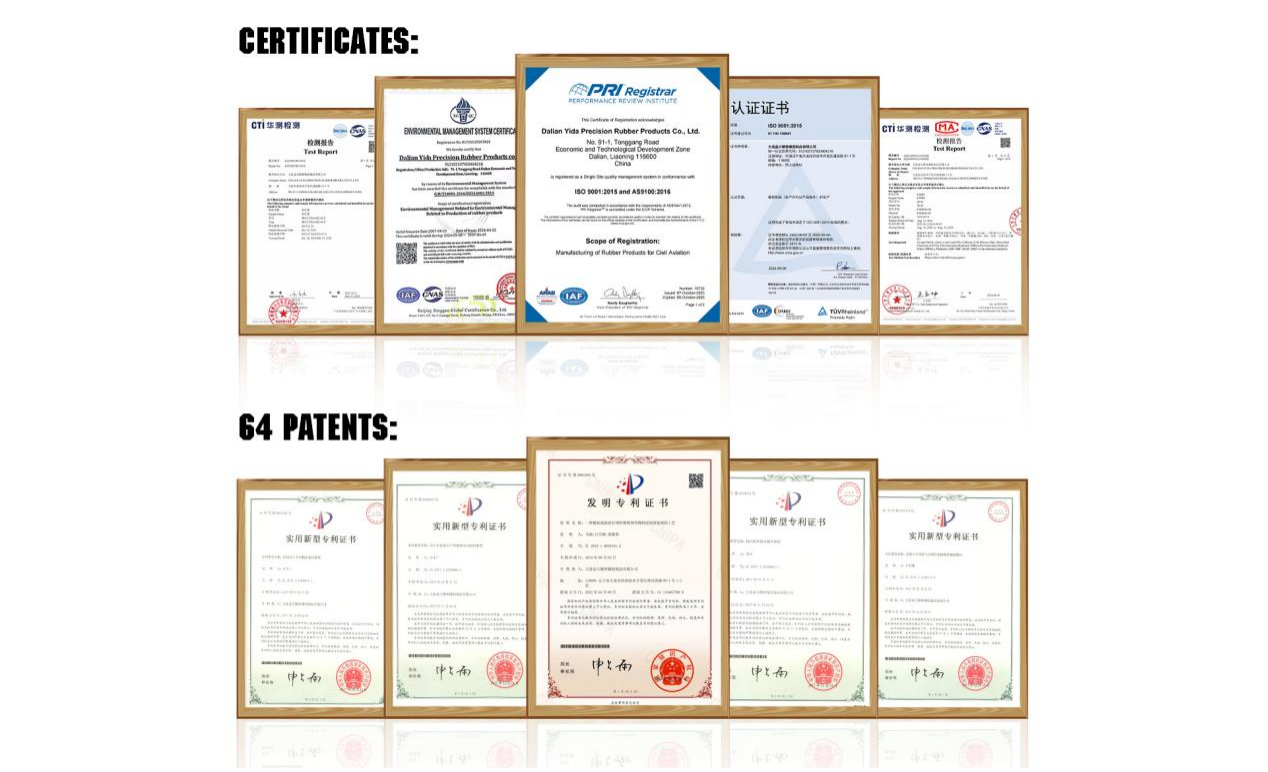
We've accomplished our ISO9001, ISO14001, IATF16949 and CNAS laboratory certifications. We are also holders of 52 patents, 4 software copyrights and over 1,000 proprietary material formulas.
Exhibition Activities:
In May 2025 we took part in the 27th Dalian International Industrial Expo. There we exhibited our precision rubber parts and tailor-made sealing solutions that have been serving global clients such as SMC, Omron and Siemens.

FAQ:
1. What preparations are needed before applying high temperature silicone rubber strips?
Please ensure the contact surfaces are dry, oil-free, and dust-free.
2. How to fix the adhesive-backed and non-adhesive-backed strips?
Just take off the release film and stick them for the adhesive-backed strips. For the non-adhesive-backed strips, secure them with a special silicone adhesive.
3. How to ensure a tight seal during installation?
After embedding the silicone rubber strips into the groove or fitting the gap, gently press to ensure a firm contact.