How to Identify High-Quality Rubber Seals Before Placing a Bulk Order
Quality Starts Before Mass Production
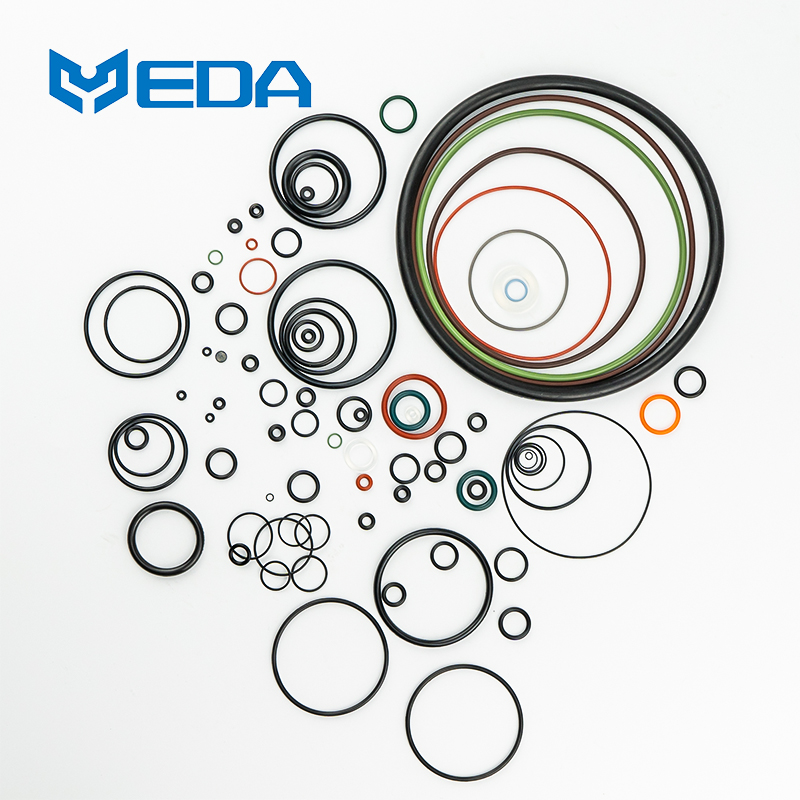
It may only cost a few cents to buy a rubber seal but if it is unstable it can cause leakage, delay in assembly, break down of equipment, or very costly customer claims. That is why, experienced buyers don’t make their decision on O-rings, gaskets, oil seals, or custom molded parts just based on price and appearance. They check the material, dimensions, physical properties, service resistance, and production controls before granting a bulk order. Depending on the use/operation, the item may be a Precision o-ring, Nitrile rubber NBR o ring, FKM o-ring, EPDM rubber o-ring, or Silicone rubber o-ring.
It is a crucial need that we at Dalian Yida Precision Rubber Products Co., Ltd. enable customers to finish this validation starting from the sample stage.
In this team, we provide assistance for standard and tailor-made rubber parts and components, reviewing of the drawing, choosing of the material, mold development, sample approval, dimensional inspection, and monitored mass production.
Here are eight verification points that buyers should check for and how Yida converts technical specifications into reliable products.
1. Confirm the Correct Rubber Compound
The polymer needs to be compatible with the working conditions. Typically, Nitrile rubber NBR o-rings are the first choice for use with mineral oils and fuels and can be considered for service at temperatures of approximately -30°C to 100°C. On the other hand, an EPDM rubber o-ring is good to go for water, steam, ozone, and outdoor exposure and may be operated at about -40°C to 125°C, depending on the formulation.
The temperature range of a Silicone rubber o-ring extends approximately from -55°C to 200°C, while an FKM o-ring is mostly chosen when there is a need for withstanding aggressive oils and chemicals and high temperatures up to around 200°C. These are typical reference ranges and should not be considered as absolute guarantees; actual performance depends on the compound, medium, pressure, and exposure time. Hence, the first step in purchasing a Precision o-ring is to choose the right compound.
Yida reviews the customer's temperature, fluid, pressure, movement, hardness, and service-life requirements before recommending a material. For critical projects, the approved compound can be linked to a material specification or test report so that the buyer knows exactly what will be used in production.
2. Check Hardness and Mechanical Properties
A hardness of 70 Shore A is chosen by many industrial seals, and typically this hardness is kept within a range of ±5 Shore A, unless the project specifies a stricter requirement. Soft compounds could promote the seal conformity on surfaces with irregularities whereas hard compounds may be better in resisting extrusion. The right value, if one is to give, should really be determined based on the groove design, pressure, assembly method and movement.
Hardness alone is not enough. Depending on the application, besides hardness, the buyer might also be interested in other parameters such as tensile strength, elongation, and tear resistance. For example, a typical industrial-grade NBR compound may have a tensile strength of a minimum of 10 MPa and an elongation of more than 200%, whereas a more demanding formulation might require even higher values. Once the material is approved, tests could be performed referring to standards like ASTM D412 or ISO 37. Yida is against the idea that a harder or stronger material is always better, and thus identifies the property targets during material approval.
3. Inspect Surface and Molding Quality
The sealing surface must be free of cracks, cuts, open bubbles, embedded contamination, missing rubber or damaged edges and it must be smooth and continuous. Flash and parting lines should not extend beyond the visual or dimensional limits agreed upon. With custom parts, corners, holes, thin walls, lips, and transitions need special care because these are the areas that typically show filling or trimming problems.
Yida manages mold condition, molding parameters, curing, trimming, handling, and final appearance. At sample approval, customers may set the acceptable look using drawings, photos, defect limits, or signed samples. This establishes a definite benchmark which can be used for the entire production batch instead of relying on subjective descriptions such as 'minor flash' or 'good surface.'
4. Measure Critical Dimensions Correctly
The most important parameters for a Precision o-ring are its inside diameter and cross-section. On the other hand, the correct sealing of a gasket depends on thickness, hole location, overall size, and flatness. Apart from that, a custom molded item may need controlled lip width, concentricity, insert position, or profile geometry.
Since rubber gets easily deformed if measured with force, this method should be the last resort for soft parts. In accordance with the product, Yida may employ suitable measuring instruments, carry out inspections visually or use tailored fixtures. The dimensional tolerances can be negotiated by comparison with the drawing and standards like ISO 3302-1. Just to illustrate, a 3.00 mm cross-section having a tolerance of ±0.08 mm should be no less than 2.92 mm and no more than 3.08 mm. We do not only look at a single sample passing, but also consider the time and batch variations.
5. Evaluate Compression Set and Long-Term Recovery
Compression set indicates how much permanent deformation remains after rubber has been compressed for a specified time and temperature. A low result generally means better recovery under those exact test conditions. For a static seal working at elevated temperature, a project might require a compression-set value below 25% after 22 hours at 100°C, although the correct limit depends on the material and application.
Tests may follow ASTM D395 or ISO 815-1. Yida can discuss suitable conditions with the customer and confirm the requirement before production. This prevents a common problem: a seal that looks perfect when new but gradually loses contact pressure after long-term compression.
6. Verify Resistance to the Service Environment
Various substances like oil, fuel, water, steam, ozone, ultraviolet rays, detergents, and industrial chemicals are responsible for different physical changes in the material such as swelling, shrinkage, softening, hardening, or cracking.
The amount of resistance required for different types of rubber gaskets, e.g., Nitrile rubber NBR o-ring, FKM o-ring, EPDM rubber o-ring, and Silicone rubber o-ring can differ quite a lot.
Although a compatibility chart can be used as the first-step guide, the performance of most critical applications should be tested extensively in conditions almost identical with the real ones.
A liquid immersion test can examine changes in volume, mass, hardness, and tensile properties pre and post-exposure. For instance, a purchaser could set a maximum volume variation limit of ±10% after 70 hours in a designated fluid at 100°C. When necessary, heat-aging, ozone, or low-temperature testing can be incorporated. Yida requests precise operating details from customers and encourages application-oriented material selection rather than making unrealistic universal assertions.
7. Make Sure the Supplier Can Repeat the Sample
Yida manages the process from drawing and mold development to sample confirmation and mass production. Critical dimensions and appearance requirements can be included in the inspection plan. For example, a first-article report may check all drawing dimensions, while routine production inspection may sample critical characteristics at defined intervals. Batch records can connect the delivered products with the material, production date, mold, and inspection results when the project requires traceability.
8. Agree on Sampling, Packaging, and Final Inspection
Before ordering, the two parties should sign off on the drawing revision, compound, hardness, dimensions, color, surface standard, packaging, and labeling. For the initial order, buyers can ask for a random check based on the AQL level agreed, for example, AQL 1.0 for crucial functional dimensions and AQL 2.5 for overall appearance, depending on the project's risk. The sampling plan must be included in the purchase or quality agreement and not be added after the production is over.
Why Buyers Choose Yida
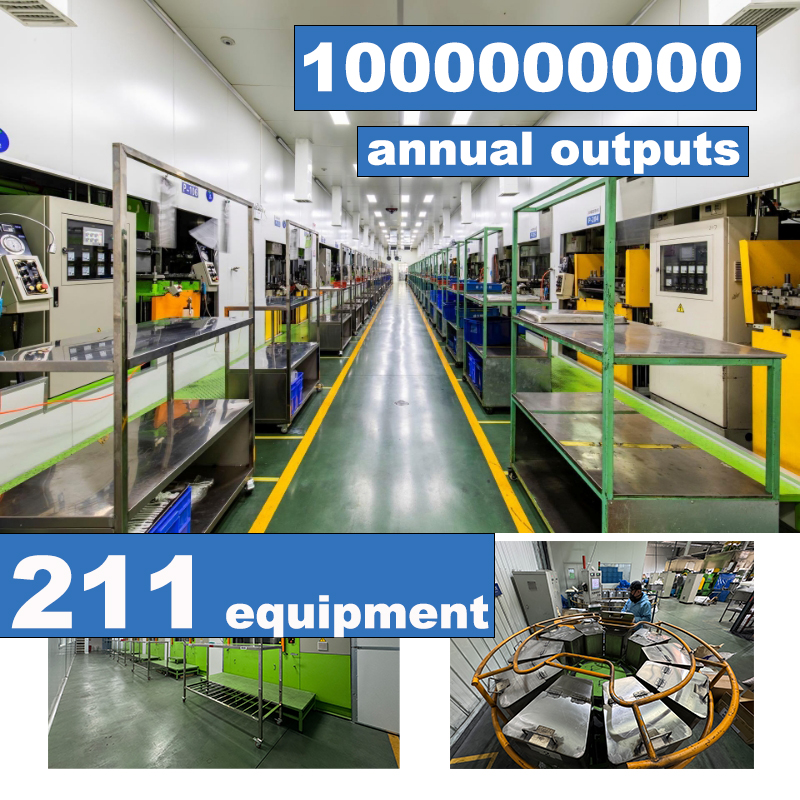
Yida combines rubber material support, custom molding, precision inspection, batch production, and export service in one coordinated manufacturing process. We work with distributors, OEM customers, and industrial users that need standard seals as well as drawing-based custom components.
If you are sourcing a Precision o-ring, Nitrile rubber NBR o ring, FKM o-ring, EPDM rubber o-ring, Silicone rubber o-ring, gaskets, oil seals, rubber washers, or custom molded rubber parts, send us your drawing, sample, material requirement, working conditions, and expected quantity. Yida will review your project and provide a practical quotation and sample solution.