How the Transparency of Medical Grade Silicone Tubing Affects the Accuracy of Fluid Monitoring in Medical Devices.
Most buyers, while choosing medical-grade silicone tubing, focus largely on the properties of temperature resistance, biocompatibility, or certification standards, and seldom do they consider the influence of the transparency of the tubing on the overall system's operational accuracy. In reality, for operations like infusion systems, biopharmaceutical processing, or laboratory workflows, less transparent tubing would hinder the operators to get an accurate assessment of the fluid conditions, thus causing potential monitoring errors and risks of contamination.
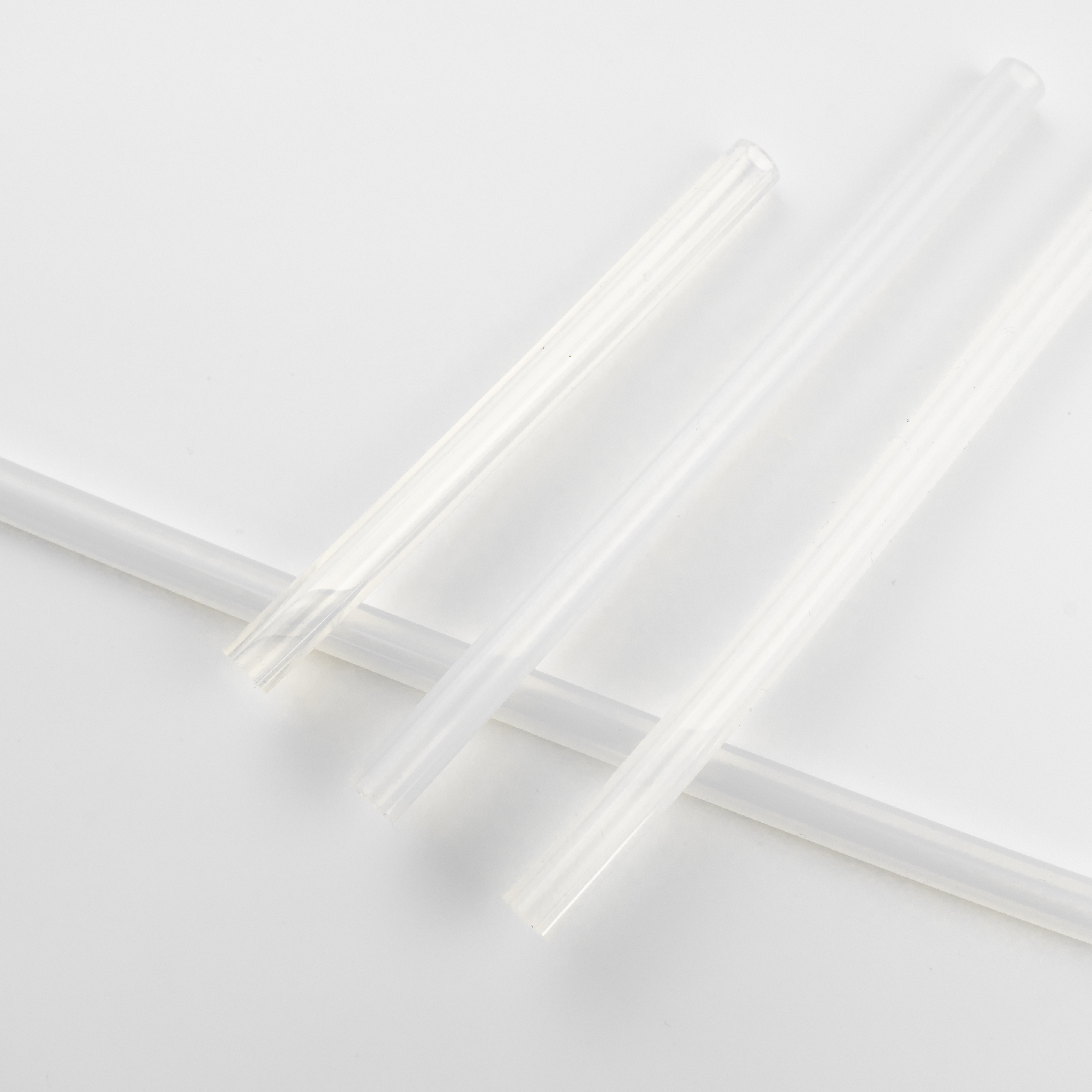
Therefore, we produce our silastic tubing medical by extrusion of high-purity medical-grade fumed silicone; it features a visible light transmittance of more than 90%, thereby making the liquid flow and bubbles inside the tube clearly visible for easy monitoring of the healthcare personnel.
How Can Silastic Tubing Medical Improve Monitoring Accuracy?
1. Increase the accuracy of manual observation.
With silastic tubing medical, it is possible to detect air bubbles and precipitates and also monitor the color of the fluid, its flow rate, and any possible blockages.
2. Improve the accuracy of machine vision and sensor detection.
Medical imaging may have a reduced contrast due to less transparency. Light may refract abnormally, boundaries may not be detected correctly, and data acquisition errors can occur in imaging equipment that is done electronically. These can lead to wrong diagnosis.
3. Ensure real-time traceability of fluid status.
Design factors such as light transmittance and inner-wall roughness directly influence the visibility of the fluid state and the detectability of sterilization residues.
How Do We Ensure the Transparency of Our Silastic Tubing Medical?
1. Source Control:
We utilize a high-purity fumed silicone rubber system. Its key characteristics include a uniform molecular structure and low internal impurity content; it is free from plasticizers and heavy-metal fillers, and the raw materials exhibit low light-scattering properties.
Compared to conventional silicone systems, high-purity fumed silicone minimizes light refraction interference caused by internal particles and impurities, thereby ensuring the material's fundamental light-transmission performance at the source.
2. Process Control:
The silicone tubing extrusion process can cause a decrease in transparency due to a few reasons such as molecular structure non-uniformity which is the result of temperature fluctuations, internal stress due to unstable extrusion speeds, and light-scattering points caused by residual air bubbles.
Therefore, we employ stabilized extrusion process controls to maintain uniform material flow during molding, preventing internal structural defects from affecting optical performance.
3. Smooth Inner Wall Design:
Our medical silicone tubing features a precision-controlled inner wall with a roughness of ≤0.4 μm, resulting in fewer fluid adhesion points and a more stable light transmission path.
This means that during the long-term transport of medicinal solutions or biological fluids, the tube wall is less prone to deposit formation, thereby avoiding visual cloudiness.
4. Aging Resistance and Sterilization Stability:
We have enhanced the material's high-temperature stability (-60°C to 220°C) and aging resistance (compression set ≤15%; tensile strength 7 MPa – 12 MPa).
Through stable molecular structure control, the material retains its transparency even during long-term use and repeated sterilization cycles.
What Buyers Must Consider: The Risks of Insufficient Transparency.
When medical-grade silicone tubing does not comply with transparency requirements, it may lead to the following hazards:
1. Medical errors: Air bubbles may remain invisible, infusion rates might be inaccurately measured, and mistakes in fluid mixing can occur.
2. Pharmaceutical loss of control: The human eye cannot track the fluid movement inside bioreactors, and monitoring of the reaction process cannot be done live.
3. Equipment false alarms or failures: Optic sensors may be triggered wrongly, and AI systems may fail to recognize objects.
4. Risks of quality and compliance: There may be some unfinished GMP documentation or batch main tracking may be unclear.
Choosing medical-grade silicone tubing is far more than just selecting a durable optical signal interface for fluid monitoring systems. As the miniaturization of medical devices is accompanied by intelligent monitoring, the transparency of the material should be regarded as one of the essential physical performance criteria—not less than temperature resistance and biocompatibility. Please reach out to us if you want to know more about the choice of silicone tubing medical.