How Rubber Components Support EV Thermal Management Systems
A cooling loop in EV also works to prevent overheating. The loop will usually pass near the places that are under the high voltage and the components with high sensitivity. In case of a leaking from a very small hole, the heat transfer can be significantly reduced, corrosion can be increased, and also, one of safety issues, an electric hazard may appear that is a great distance away from the fitting which was the source of that leak.
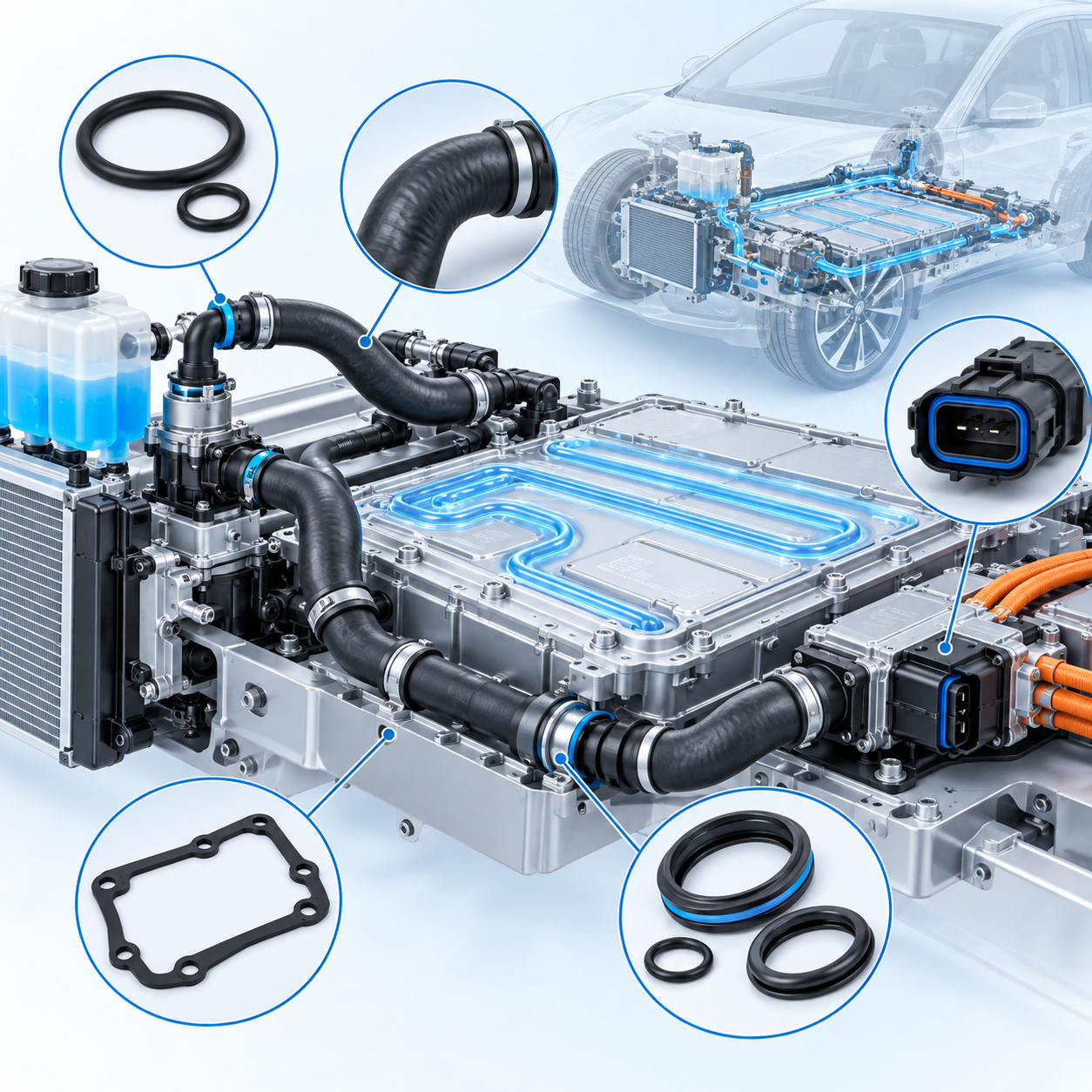
Thermal management seals around EVs support the loop in different places along the joints, manifolds, pumps, chillers, battery plates and electronic housings. The situation varies significantly for each place because of the combination of the coolant, temperature cycling, pressure pulsation, assembly torque and environmental exposure to the outside.
At the Hose Connection
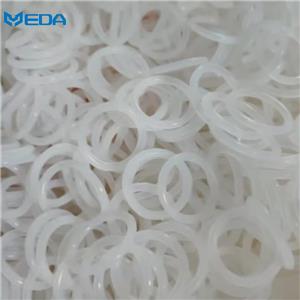
Standardly O-rings are used by creating a machined groove, providing correct lubrication, and ensuring controlled insertion. But in modern compact coolant circuits, joints can be very small and even assembled at a high speed. The presence absence of a ring twist and compression are problems that are likely still hidden even after a fastener has been added
Parker explains how a sealing washer in the form of EV HVAC and battery cooler connector connections can be bonded with metal seal washer as a way of sealing without any groove machining and the compressing of the elastomer is a function of the geometry that is already present in the product. It is a supplier guideline page rather than a warranty document of an OEM for this product. [2]
Across the Battery Cooling Plate
The perimeter of a battery cooling system could be extremely large or have multiple ports. Cooling plates and housings might be manufactured thin so that the total mass is minimized. As a result, flange movement will be influenced by bolt spacing and thermal expansion. A seal must adapt to the gap while still not applying excessive force that could distort the plate.
DuPont’s Renault project was about a type of thermal interface material rather than that type of rubber seal, nevertheless its context demonstrates how a surrounding system is a constraint when making choices. A small portion of this material will be sandwiched between the cells and the cold plates, the material therefore needs to conduct heat from the battery cell to the cold plate. It needs to be highly volumetrically dispensed and repair considerations should be incorporated into the product design. [1]
For thermal management rubbers, the understanding is that the seal must not be separate from how heat transfer is performed and from the way components are put together. A seal could be very thick and yet it might hinder the contact between the parts or make the load on one part more than the other one. So in general sealing and cooling designs should be based on the same geometry of the housing.
Near the Inverter
Power connectors need environmental sealing while carrying high voltage and current. The lubricant used during assembly can remain in contact with the elastomer at temperatures above normal cabin conditions. Chemical compatibility between grease and seal becomes part of electrical reliability.
DuPont reports a Chinese vehicle-manufacturer case involving EPDM and silicone O-rings around inverter power cables. Its team aged specimens for 250 hours at 85 degrees Celsius and room temperature and compared mechanical properties with a control lubricant. [3]
The case supports lubricant screening, but it does not establish the life of every assembled connector. Rubber seals for electric vehicles also need finished-connection tests for compression, moisture ingress, thermal cycling, vibration and the actual assembly process.
Coolant Chemistry Changes Over Time
EV coolant seals may contact water-glycol mixtures, inhibitors, traces of oils, cleaning fluids and air. Concentration can change through service or manufacturing contamination. Temperature accelerates swelling, extraction and hardening, so room-temperature immersion alone provides limited evidence.
Record the named coolant, concentration, supplier and revision. Include new and aged fluid if the service program expects chemical change. A generic statement such as glycol resistant is weaker than test conditions and allowable changes in volume, hardness and tensile behavior.
Temperature Cycling Moves the Joint
Metal, plastic and rubber expand at different rates. Rapid charging, cold soak and coolant warm-up can move the groove and change squeeze. A large battery housing may also bow between bolts. The seal should retain contact at the minimum gap without becoming overfilled at the maximum squeeze.
EV thermal management seals need cycling that combines temperature and pressure. Sequential exposure can miss interactions: a part may swell in hot coolant, cool in a compressed groove and then experience a pressure pulse before it recovers.
Electrical Context Adds New Limits
Leak prevention is necessary but not sufficient. Materials near high voltage may need limits for ionic contamination, flammability, conductivity or compatibility with dielectric coatings. Those requirements depend on location and should not be copied across the vehicle.
For battery cooling system seals, the failure review should distinguish internal coolant leakage, external water ingress and permeation. Each path uses different test fixtures and acceptance criteria. Dye traces or pressure decay can help locate the path after cycling.
Release the Complete Connection
Use production-intent EV coolant seals, housings, fasteners, lubricant and assembly torque. Test coolant exposure, pressure pulsation, vacuum filling if used, thermal shock, vibration and leak rate. Inspect the rubber and mating surfaces after disassembly.
Repeat testing after storage and after realistic assembly handling. A seal that passes in a new laboratory fixture may be cut by a production connector edge or displaced during hose installation. The validation route should preserve cavity and material-lot traceability.
A second review of rubber seals for electric vehicles should cover service replacement. Define whether the seal is reusable, how the surface is cleaned and which lubricant is allowed. Those instructions protect the same thermal and electrical boundaries established in production.
Yida can review thermal management rubber components when the customer provides coolant identity, concentration, temperatures, pressure cycles, flange movement, hardware, leak limit and electrical cleanliness requirements. That information turns the seal into a qualified part of the loop rather than a generic accessory.