Why Rubber Seals Matter in Compact and Miniaturized Equipment Design
A packaging review for seals that must work with less groove depth smaller hardware and tighter assembly access
A smaller housing rarely gives the seal a smaller version of the old job. The groove becomes shallower, the flange becomes thinner, fasteners move farther apart and assembly tools lose access. At the same time, the equipment may still need the same pressure, leak limit and service life.
Compact equipment seals matter because they sit at the intersection of the new constraints. Their cross-section affects groove depth, compression force, tolerance sensitivity and handling. Reducing diameter on a drawing without rebuilding that relationship usually removes margin.
The Groove Loses Depth
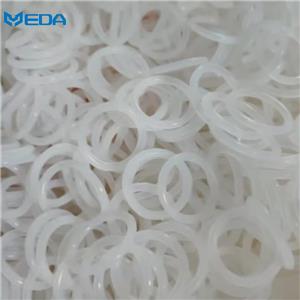
A small O-ring design has less room for compression and volume accommodation. Mold flash, parting-line mismatch and coating thickness consume a larger share of the available clearance. A few hundredths of a millimeter that were harmless in a larger gland can change squeeze or prevent assembly.
The Parker O-Ring Handbook explains that compression depends on application type and cross-section, and warns that sharp edges and rolled installation can damage the ring. Its tables are design guidance, not permission to ignore the tolerances of the specific housing. [1]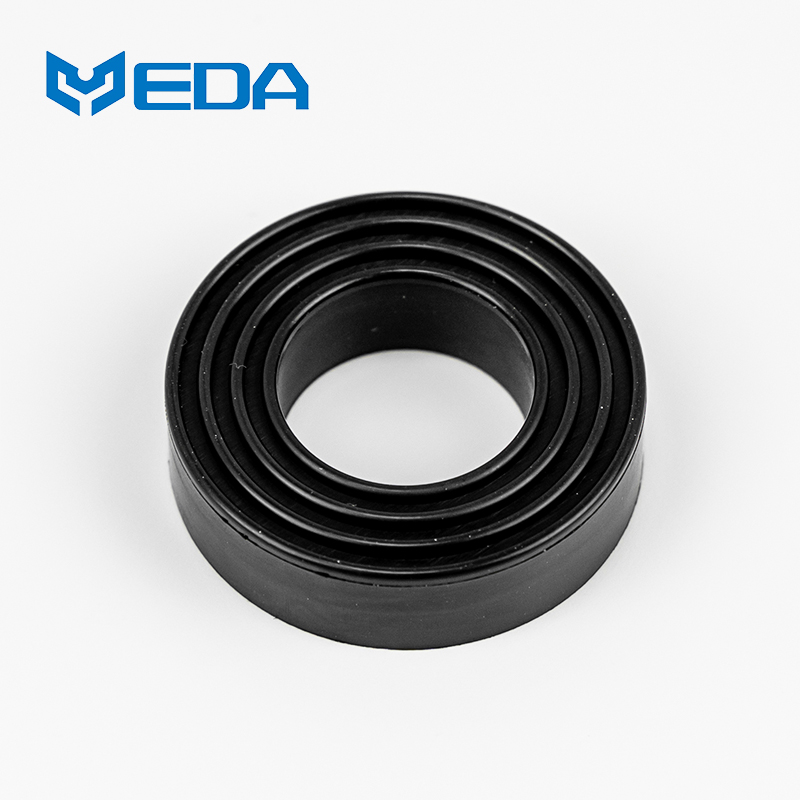
The Flange Loses Stiffness
Thin walls and widely spaced screws can bend under sealing load. Increasing squeeze to create security may distort a plastic cover or create low-pressure zones between fasteners. Finite-element analysis can locate likely gaps, but it needs realistic rubber behavior and confirmation in hardware.
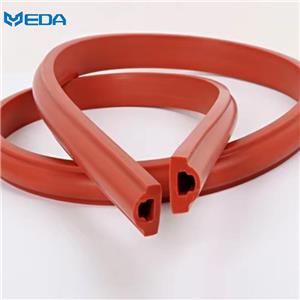
Compact sealing solutions often use a shaped bead, retained gasket or rigid carrier to place force only where it is useful. The design should show the load path from screw torque through the flange to the sealing line and define how much variation the bead can absorb.
The Assembly Loses Finger Space
Miniature rubber seals are difficult to see and easy to dislodge. Tweezers can nick a working edge. Grease used for temporary retention can attract contamination or alter material response. A press-in-place feature, integral carrier or molded locating pin may be more reliable than a loose ring.
Automation does not remove the issue. Very light seals can cling to tooling or packaging through static charge. Vision contrast and gripper access should be designed into the part and fixture before the product layout is frozen.
A Diesel Module Case
Parker reports a light-truck diesel oil-cooler redesign that required eight seals around different ports. The previous module used silicone O-rings with limited durability in extended-life coolant and wide groove requirements. The proposed Diamond Seal forms ranged from rings to complex multi-port geometries. [2]
EPDM was used for coolant passages and fluorocarbon rubber for oil. Parker states that the parts survived on-engine and 3,000-hour thermal-cycle bench tests, while the geometry reduced groove size and improved self-retention. The supplier case does not publish the full customer test protocol or acceptance limits. [2]
The case is relevant to miniaturized equipment design because packaging improvement came from material and geometry together. One universal elastomer was not forced across all eight locations, and the seal form was changed to fit the module's assembly and fluid duties.
Slight Parts Lead to Huge Handling Difficulties
Three of SIMTEC's silicon parts in its public continuous-glucose-monitoring case had weights of 0.03, 0.11 and 0.33 grams. The company claims that static effects were intensified due to the small mass and therefore, separation and handling had to be custom inside an ISO Class 8 cell. [3]
Although those were for a medical device and not an industrial one, the general takeaway for manufacturing is still the same: miniature rubber seals might be more labor-intensive to count, position and distinguish between cavities compared to larger parts.
Material Data Relies on Full Size Specimens
A compound data sheet could present tensile strength, elongation, hardness and compression data on standard size test pieces. Th inner molded feature may cure and cool at a different rate, and there is a possibility that its performance will be determined primarily by a knit line, gate, vent or local thickness change which might appear.
With seals for compact equipment, compare data of the material level to measurements on production-intent parts. Inspect critical cross-sections, flash, surface defects, etc. Then, soak or heat up and cool down the real products exactly as done for the intended liquid and temperature cycle.
Validation Must Be Done with Real Hardware
Manufacture assemblies at tolerances maxima and minima, as well as using real fasteners. Check leak performance of seal at minimum and maximum temperatures, pressure cycle and vacuum if applicable. Add vibration or connector loads that cause the housing to shift.
Absorption of the fluid should be the criterion, so a leak test that passes might be hiding a flaw that could lead to failure in the next use only to be revealed when the assembly is being disassembled. If reuse during the lifecycle is expected, then repeated assembly ought to be considered in testing.
Measurement technology is another aspect of the small O-ring second design review. Tell whether diameter & cross-section are measured freely, as conditioned or when in fact the seal in place. In general, with compact sealing solutions where you have non-circular beads, your local height and position could be more relevant for performance than just an average.
Miniaturization also makes the price of a defect go up. A small leak is enough to ruin the closely-packed sensor board or contaminate the narrow optical channel.
It's very important to define the containment boundary before the last layer of protective covering is added.
When the component is marked through paint, for instance, the mark is not going to last and therefore will not be easily readable. Use a marking system like cavities, packages, labels or scans.
Compact equipment frequently needs more than one visually identical sealing part, so a color or shape distinction could serve as a code if pigment or feature doesn't interfere with working.
Yida will carry out the miniaturized equipment design review for the customer who provides the full stack of tolerances, material of the parts involved in the seal, how the parts are joined, assembly access, fluid, temperature, and leakage target. When the seal and housing are considered as one system, the seal part, which is the smallest in geometry, would be no problem.