Silicone Rubber Components for High-Temperature and Flexible Sealing Applications
How to define the real temperature media motion and geometry requirements before selecting a silicone sealing solution
Silicone is often discussed as if it has one universal temperature rating. In practice, the useful limit depends on the compound, exposure time, surrounding medium, seal geometry and allowable change in properties. A temperature printed on a data sheet is a starting point, not approval for the finished component.
Silicone rubber components are attractive when a seal must remain elastic across a broad temperature range, resist weathering or provide electrical insulation. They appear in appliances, electrical systems, lighting, industrial equipment and other assemblies where heat and flexibility occur together.
The design question is not simply whether silicone can tolerate heat. Silicone rubber material selection must ask whether the particular compound can maintain sealing force, resist the contact medium, survive assembly and remain intact through the expected number of thermal and mechanical cycles.
Why Silicone Behaves Differently Under Heat
The silicon-oxygen backbone of silicone elastomers contributes to stability over a wide temperature range. Formulation then changes hardness, tear strength, compression set, curing behavior and regulatory suitability. Two materials both called silicone can therefore perform differently in the same hardware.
Heat aging may increase hardness, reduce elongation or change compression recovery. Oxygen availability also matters. The Parker O-Ring Handbook notes that an air-aging result for a high-temperature silicone should not be assumed to represent every sealed environment. The surrounding medium changes the aging mechanism.
High temperature silicone seals must retain enough elastic reaction force after time at temperature. If compression set becomes excessive, the part may no longer follow joint movement or tolerance changes. Leakage can appear even when the seal still looks smooth and undamaged.
Short peaks and continuous exposure should be specified separately. Dow, for example, publishes a range of -65°C to 260°C for one named high-temperature sealant, with higher short peaks. That figure belongs to that product and cure system; it is not a general rating for every molded silicone compound.
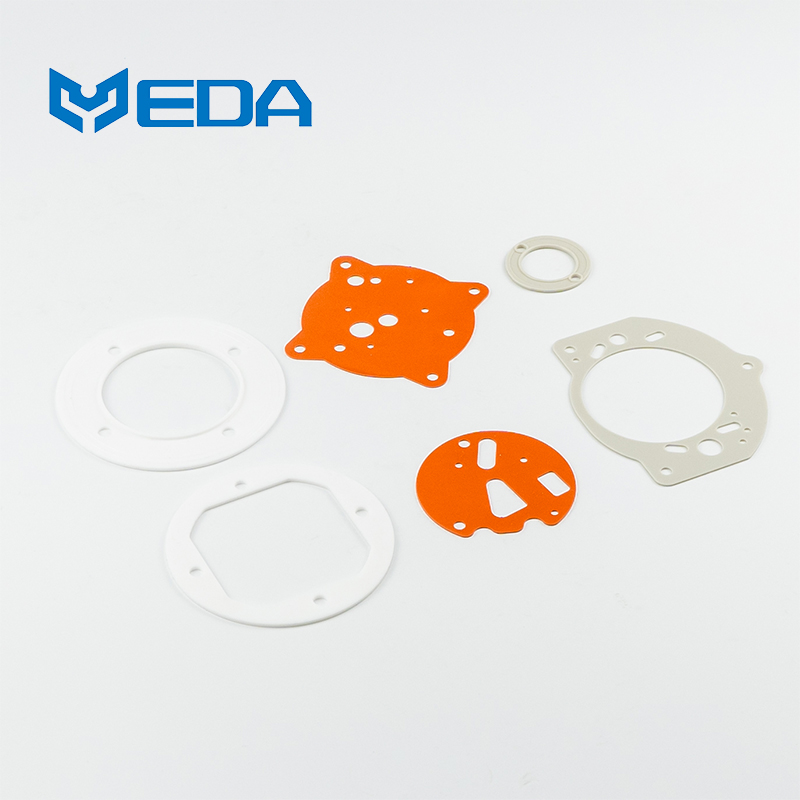
Only Flexible Materials Can Benefit from Flexibility
Flexible materials can conform to temperature changes, vibration, and small surface displacements but they still need enough compression for a proper seal. Insufficient pressure can result in a leak path while excessive squeezing increases assembly force, stresses on the rubber, and takes up space needed for the thermal expansion or volume change.
The shape of the surface in contact is a significant factor in how well a flexible rubber seal works. A sharp angle on a part can create localized strain. A thin sealing lip can get twisted or ripped during installation time. An expansive unreinforced area between mating surfaces may be the first to be extruded when pressure is applied. The soft touch of silicone compound will not eliminate these geometrical dangers.
Designers should clearly specify maximum and minimum dimension of the groove, joint motion and surface condition to be expected. To function properly, the seal must work when the joint surfaces are at the extreme positions, not just at the nominal value.
One of the main reasons for using a stack-up method is that the components of metal/plastic materials, which may be different in rate coefficient, cause the effect as one material expands and the other contracts. Therefore, in order to avoid errors and mistakes, a good stack up analysis or review is very critical.
Sharp edges which assist installation or lead parts into the place during assembly may cause tears or ruptures. So, to avoid installation damage, sharp edges which might tear parts during removal should be minimized by making installation-induced cuts. If a part has to be expanded over a connector or socket, then a simulation representing the actual way of assembly is absolutely necessary. In fact, stretching and stretching on the surface do not have the same impact. Stretching may lead to breakage while it will only be an issue when sealing with multiple layers.
Media Exposure May Influence Selection
The same sealing material will have different responses according to the media exposure it is subjected. Coolant, steam, dry heat, cleaning agents, fuel, and oil each will demand different things of the same sealing material. Although silicone is a type of rubber, it is quite different. It cannot even be considered as such after testing all the oils and solvents which it might be required to withstand. In fact, such effects as swelling, softening and extraction which may take place when materials come into contact with each other, can lead to reduced performance of material.
In view of these, it is therefore the selection of material for silicone rubber that should come first with specifying the exact medium to which the material is to be exposed. You may find it beneficial to keep a record of such as the concentration of the media, temperature of contact etc., time duration pressure level, etc. of the material, whether the materials are a mixture with other ones or are being refreshed after use. Even an assembly paste (lubricated grease applied on a component just before installation in order to make the assembly easier and reduce friction) has an effect on the sealing system performance since seal and paste will be in direct contact for a very long time.
DuPont's work on the development of materials and methods for sealing the connection between the power cable and the inverter unit of an electric vehicle is an excellent tool towards improving public awareness of this aspect. The study was carried out using different varieties of O-rings (e.g., silicone and EPDM), as a requirement of protecting the joint from moisture at high temperatures (up to 120⁰). The test examined a lubricant for its characteristics, compatibility with rubber and thermal, without assuming any rubber will suit, as a matter of fact, it did aging tests on rubber of different types, showed lubricants properties, and compared its behavior with that of a conventional lubricant.
Such example is not just another case showing that there's a material you switch into a higher heat material as solution. It rather draws a line between them which shows they have to be considered and analyzed together. It is a demonstration of the importance of studying the rubber, the grease, heat and the electrical enclosure which contains the assembly, as well as the way the different ingredients are used and the effects.
Where Silicone Needs Caution
Silicone is often weaker in tear and abrasion resistance than several other sealing elastomers. Parker recommends certain silicone compounds mainly for static service because of poor wear resistance. A reciprocating rod, rotating shaft or abrasive installation path may therefore require another material or a different seal arrangement.
Gas permeability can also be higher than with some alternatives. That may matter in vacuum, gas retention or long-duration pressure applications. The correct response is not to reject silicone automatically, but to set an allowable leakage rate and test the real geometry under the real pressure and temperature.
Bonding can be another variable for rubber-to-metal or rubber-to-plastic designs. Surface preparation, primer, contamination and cure conditions influence adhesion. A material data sheet for the rubber cannot prove bond durability in the final insert-molded component.
Food-contact, medical or low-volatility applications require additional controls. A supplier statement may apply only to a particular grade, cure schedule and post-cure condition. The finished part, processing aids, pigments and cleaning method must remain within the applicable requirements.
Common standards and their role
ASTM D2000 is a test method that groups vulcanized rubber materials according to heat-aging types, oil-swelling grades and other property requirements. It supplies a standardized way for specifying material qualities. Furthermore, ASTM mentions that a detailed product specification overrides a classification when the needs of the application are more specific than the classification covers.
ISO 3601-5 selects various elastomeric materials for industrial O-rings, and the document demands that physical properties and test methods of these O-rings are agreed upon by both user and supplier. It gives a material specification to a certain degree, but the certification of an arbitrary shape, groove, or operating system cannot be done.
Nobody document alone is sufficient evidence that the seal lifetime is secured. A standard tensile test does not simulate the stress that the material has in a molded corner and laboratory aging conditions may not be representative of a mixed fluid or thermal cycle. Standards provide a minimum, application testing gives the actual product result.
In regard to custom silicone rubber parts, the technical specifications or drawings should show material requirements through dimensional, visual and functional requirements. If the production and inspection teams are always to refer to the specification when working, critical dimensions, flash limits, surface defect and post-cure requirements, for instance, need to be described in a language they understand.
A Finished-Part Validation Route
Start with a controlled material and dimensional review. For high temperature silicone seals, confirm compound identity, agreed properties, part dimensions and visible molding condition. Check the groove and mating parts at their tolerance limits before environmental testing begins.
Next, condition assembled samples at the continuous operating temperature and at justified thermal cycles. Measure leakage or sealing function during exposure when possible, not only after cooling. Hot performance can differ from the apparent condition of a seal examined at room temperature.
Add the actual media, lubricant and cleaning residues expected in service. Record mass, volume, hardness or tensile changes when those measurements support the risk review, but also inspect the assembled seal for extrusion, cracking, loss of contact and installation damage.
If motion is present, test the required stroke, speed, pressure and cycle count. Flexible rubber sealing in a moving joint needs friction and wear evidence. A static compression test cannot establish dynamic durability.
Finally, open the assembly and inspect the whole interface. Note permanent deformation, adhesion change, surface marking and deposits. Acceptance limits should be linked to the customer's functional requirement, and sample size should reflect the consequence and variability of the application.
Working With a Custom Molder
A useful inquiry includes more than a 2D part drawing. Share the maximum continuous and peak temperatures, media, pressure, motion, assembly method, expected life, regulatory needs and leakage criterion. Photos or a section of the mating hardware can clarify risks that are difficult to express in dimensions alone.
Dalian Yida Precision Rubber Products Co., Ltd. develops custom silicone rubber parts for customer-defined applications. Our role is to review manufacturability, discuss material and geometry options and support agreed inspection and validation plans—not to treat a generic material rating as a finished-product guarantee.
When requirements are uncertain, prototype samples can help identify assembly or sealing concerns before mass production. The prototype should use representative material, tooling condition and post-cure wherever these factors affect the result. Any later production change should be assessed against the validated configuration.
The strongest silicone solution is one with a clearly defined application envelope. Heat resistance, flexibility, media compatibility, geometry and processing must support one another. With those conditions documented and the finished component tested, silicone rubber components can be a practical choice for demanding sealing work.