Yida September Improvement and Innovation Recognition Activity
Recognizing the practical ideas careful observation and shared responsibility that help daily manufacturing work move forward
In September 2026, Dalian Yida Precision Rubber Products Co., Ltd. held an activity focused on improvement and innovation. It was a moment to recognize employees who paid attention to daily work, raised useful suggestions and helped turn small observations into practical action.
The Yida improvement activity was not only about a single idea or one department. It reflected a simple belief inside our company: the people closest to a process often see details that others may miss. Giving those observations a place to be heard is an important part of making work better.
Recognition also sends a message about what the company values. Careful thinking, responsible action and willingness to cooperate may not always look dramatic, but they are the habits that support stable manufacturing. September gave us an opportunity to bring those habits into view.
Improvement Often Begins With an Ordinary Question
Many useful changes begin with a very ordinary question. Why does this step take longer than expected? Why is the same information entered twice? Could a tool be placed closer to the point of use? Is there a clearer way to identify material, status or responsibility?
These questions can arise beside a molding machine, at an inspection station, during packing or while a team reviews an order. They do not require a grand invention. They require someone to notice a repeated difficulty and care enough to ask whether it can be handled more clearly.
Manufacturing improvement ideas are most valuable when they start from a real condition. A suggestion should describe what is happening, who is affected and what change might help. That makes it easier for colleagues to discuss the idea instead of relying on a slogan or a vague promise.
At Yida, we want employees to feel that observation is part of the job, not an interruption to it. A person who points out an unclear handoff or an avoidable motion is helping the team see the process more honestly. That honesty is where practical improvement begins.
Turning an Idea Into Something the Team Can Use
An idea becomes useful only after it is understood and tested in the place where it will be used. The first proposal may need questions from production, quality, engineering or another team. Those questions are not a rejection. They help define the problem and reveal possible side effects.
For example, saving a movement at one station is helpful only if it does not make identification, inspection or maintenance more difficult later. A faster method must still protect product requirements and workplace safety. Improvement is therefore a team activity, even when the first thought comes from one person.
Continuous improvement at Yida means looking beyond the first impression. Teams need to consider whether a change can be followed consistently, whether instructions remain clear and whether the result can be checked over time. A practical solution should survive a normal busy day, not only a demonstration.
This is why employee participation matters. Operators understand the rhythm of the station. Quality colleagues see recurring defects and inspection concerns. Engineering understands product and process limits. When these views meet, a suggestion has a better chance of becoming a dependable working method.
What Recognition Is Meant to Encourage
The September activity placed attention on the behavior behind improvement: noticing, thinking, discussing and following through. Employee innovation recognition is meaningful when it encourages more people to speak about problems constructively and to share possible solutions with the right colleagues.
Not every suggestion will be adopted exactly as first proposed. Some may need a trial. Some may uncover a different root cause. Others may be useful in one area but unsuitable in another. A healthy improvement culture allows ideas to be examined seriously without pretending that every idea produces an immediate result.
Recognition should therefore celebrate responsibility as much as novelty. An employee may improve a label, a fixture, a work sequence, a communication point or a safety reminder. The change may look small from outside, yet it can make the daily process easier to understand and easier to repeat.
The purpose is not to chase change for its own sake. It is to make the work safer, clearer, more stable or more efficient while protecting product requirements. That practical standard helps keep improvement connected to real manufacturing needs.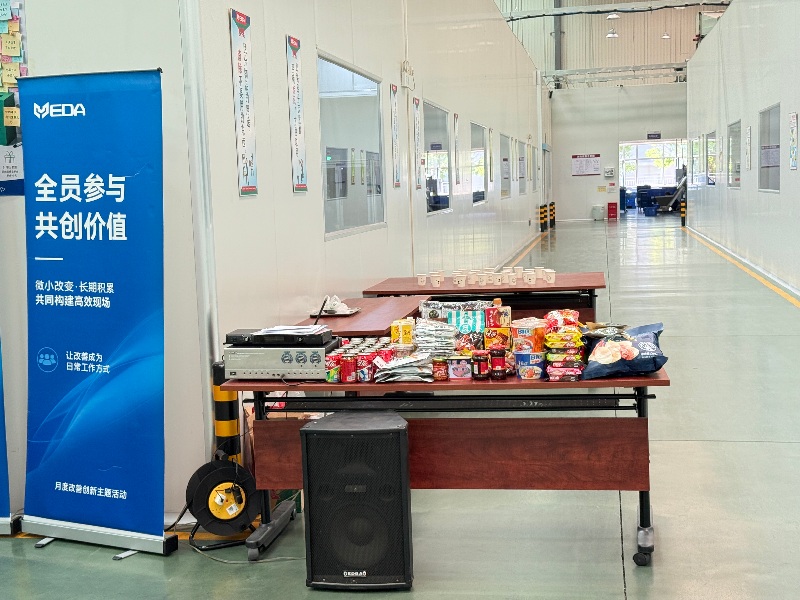
Three Questions We Ask About a Proposed Change
First, what problem are we actually trying to solve? A clear description prevents the team from treating a symptom while the original cause remains. Facts from the work area, repeated observations and input from the people involved help establish the starting point.
Second, what else could the change affect? A process is connected to material flow, tooling, inspection, records and delivery. A good discussion includes the next person in the sequence and considers whether the proposal moves difficulty elsewhere.
Third, how will we know that the new method is useful? The answer may involve a simple confirmation, a controlled trial or a period of observation. The method should match the risk. Claims about savings, quality or output should be made only when suitable records support them.
These questions help manufacturing improvement ideas move from enthusiasm to evidence. They also protect the employee who raised the idea, because the team shares responsibility for evaluating and implementing any change.
Improvement Connects Departments
A rubber component passes through many hands before it reaches a customer. Requirement review, tooling, material preparation, molding, secondary operations, inspection and packing all depend on information from another step. A local improvement can therefore have value far beyond one workstation.
The Yida improvement activity gave us a reason to talk about these connections. When colleagues understand how their decisions affect the next operation, communication becomes more specific. A note, identification method or timing change can be discussed in terms of the entire flow.
This cross-functional view is especially important in precision rubber manufacturing. Different products may require different materials, tolerances, visual criteria or handling controls. Improvement must respect those differences rather than forcing every job into one convenient method.
Working across roles also builds mutual respect. A practical proposal may begin on the shop floor and require support from engineering. A quality concern may lead to a fixture change. A packing observation may reveal that earlier identification can be clearer. Each role brings information the others need.
A Culture Built Through Repeated Actions
Yida company culture is shaped by what happens after an activity ends. If an employee raises a concern, someone should listen. If an idea needs more information, the next step should be explained. If a trial does not work, the lesson should still help the next discussion.
Continuous improvement at Yida is not a campaign that belongs to one month. The September recognition offered a visible moment, but the real work continues in daily communication, standard review and the willingness to correct a method when evidence shows a better way.
The company also has a responsibility to keep expectations realistic. Improvement does not mean asking employees to solve every difficulty alone. Resources, technical review and management support are often needed. Recognition matters most when it is connected to a process that helps people act.
This approach supports a workplace with both warmth and discipline. People are encouraged to contribute, while proposed changes are still evaluated carefully. That balance protects employees, products and customers at the same time.
Carrying the September Spirit Forward
The employee innovation recognition activity reminded us that progress is made by people who care about the details in front of them. A clear question, a useful sketch, a revised placement or a better handoff can begin a conversation that strengthens the whole process.
We hope more colleagues will continue to share observations and take part in improvement. The goal is not to make every day feel like an award event. It is to make responsible participation a normal part of working together.
For customers and partners, Yida company culture is reflected in the way our people approach their work: carefully, practically and with respect for the next step. The recognition activity was one expression of that attitude and of the team strength behind our precision rubber manufacturing.
Dalian Yida Precision Rubber Products Co., Ltd. will continue to encourage ideas that can be understood, evaluated and carried into daily practice. By listening to the people doing the work, we build a stronger foundation for reliable manufacturing and long-term cooperation.