Supply Chain Localization Is Becoming More Important for Automotive Rubber Components
Material control and capacity utilization of regional plant are balanced by the different parts of sourcing and routes are shorter.
When a part is molded close to a vehicle plant where the compound, mold steel, adhesive, and inspection program are still supplied by far away suppliers, it is not necessarily that the part is local. It is just that calling it local may help reduce final freight without the major risks that led to the sourcing review.
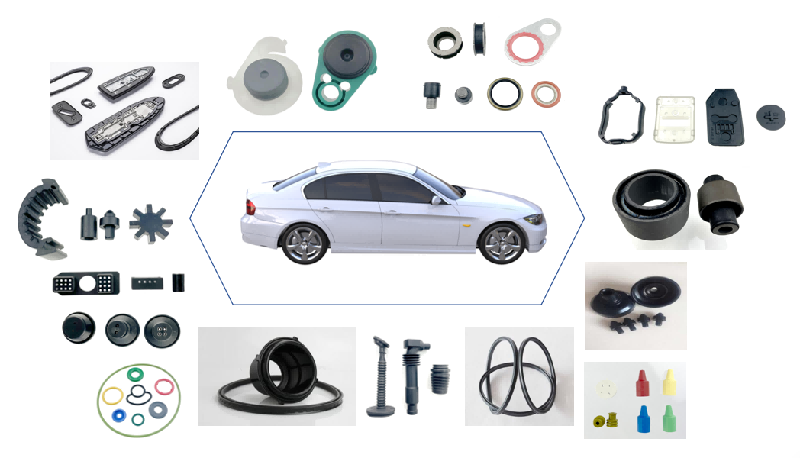
The supply chain of automotive rubber is an integrated system involving formulation, blending, tooling, molding, post-curing, inspection, and logistics. Localization is justified only when it allows a quicker response, better visibility on capacity, and better coordination of engineering and yet doesn't affect the quality of the materials and the processes that have already been approved.
Origins of Automotive Clusters
According to the 2025 automobile industry outlook released by the International Energy Agency, successful locations for cars are usually found within clusters of plants, components suppliers and material manufacteners. Being close helps cut down the expenses on a project and also facilitates the sharing of knowledge between the team and the partners. [2]
This finding reinforces the rationale for sourcing rubber at home where one is a manufacturer, because sealing difficulties often mean working together with the mold, compounders, assembly factory, and design department to look at a common part. Yet, it doesn't prove that the nearest supplier is the one that a particular item will be sourced from, and also that the supplier will be able to handle such a production task.
Pieces of OEM Investment That Are Happening Right Now
In a news piece, Hyundai Motor Company has announced a USD 21 billion investment plan in the US for the years 2025-2028. A portion of these funds has been earmarked for parts manufacturing as well as for logistics and steel industries that amount to almost 167704167 dollars. One of the items on the list is more of the localization of EV battery packs and the related automotive parts besides the components. [3]
It is true that these remarks are primarily devoted to batteries and not tires, but in a wider aspect they illustrate the magnitude through which the car, parts, and logistics sectors are being interlinked. The automobile supplier must meet the approval, manufacturing date, and recovery deadlines of the vehicle program.
Localizing the Part Is Not Localizing the Compound
A molded part may use an imported polymer, specialty filler or cure package. If the approved compound is mixed in another region, lead time and disruption risk remain. If the compound is reformulated locally, equivalence cannot be assumed from polymer family and hardness.
Automotive seal localization should identify which inputs are regional, which remain single-source and which substitutions require customer approval. Material batch, mixing site and recipe revision should remain traceable through the finished shipment.
Tooling Transfer Changes the Process
Moving a mold to local rubber manufacturing may change press size, heating, controls, release method, trimming and inspection. A tool that produced acceptable parts at one site may need maintenance or process redevelopment after transport.
A transfer plan should inspect the tool before shipment, preserve setup records and identify spare inserts or gauges. Trial parts need cavity-level dimensional and functional comparison with the approved baseline. The new site should not inherit an undocumented process window.
Rules of Origin Affect the Business Case
The USITC's 2025 report on USMCA automotive rules of origin found that many sourcing changes made to meet the rules increased production cost, while some reduced cost or had no change. The report also identifies EV components and new production technologies that create classification issues. [3]
This is a useful boundary for the sourcing review. A tariff or content rule can influence location, but it does not set a seal's technical specification. Commercial origin documentation and engineering approval need separate controls.
Shorter Routes Change Inventory Decisions
Regional production can shorten replenishment time and reduce material in transit. It may allow smaller order quantities or faster response to engineering changes. These gains depend on actual compound, tooling and labor capacity rather than map distance.
Localized rubber component sourcing can also concentrate risk if several vehicle plants depend on one regional compounder or tool shop. Capacity, business continuity, utilities and disaster recovery should be reviewed at sub-tier level.
Approval Must Follow the Change
The receiving plant needs the same drawing, compound and inspection revision as the existing source. Compare material certificates, dimensions, surface criteria and process records. Then perform application-specific aging and finished-part tests.
For automotive seal localization, use representative assemblies and the customer's required submission route. Leak, compression, adhesion or dynamic tests should match the part's duty. A passed site audit does not prove that a transferred part performs identically.
A Better Localization Scorecard
Track total lead time, approved capacity, recovery time, defect response, engineering access, logistics exposure and change-control maturity. Add material and tool dependencies that remain outside the region. Piece price alone can hide the reason the project started.
Regional automotive suppliers should state what they make directly and what comes from approved partners. Transparent sub-tier mapping helps the OEM understand which risks were reduced and which were only moved.
Currency, duties and freight should be separated in the commercial model. A regional quotation may carry higher conversion cost and lower transport or disruption exposure. Naming those assumptions makes future review more useful than a single landed-price comparison.
The launch plan should include communication across time zones and languages where design authority remains elsewhere. Drawing clarifications, deviations and tool changes need one controlled route so speed from the local factory does not create parallel technical decisions.
A second automotive rubber supply chain review should model a line stop, a compound shortage and a tool failure separately. Each event needs a different buffer, dual-source or repair plan. Localization is valuable when those plans become faster and more credible.
For a Yida localization discussion, provide vehicle region, launch timing, annual demand, approved compound and source, tooling ownership, submission level and recovery target. That information allows local rubber manufacturing or regional supply to be evaluated without weakening product control.