Rubber Component Traceability Is Becoming a Key Requirement for Global OEMs
Following one seal backward from vehicle system to assembly lot cavity compound batch and approved change record
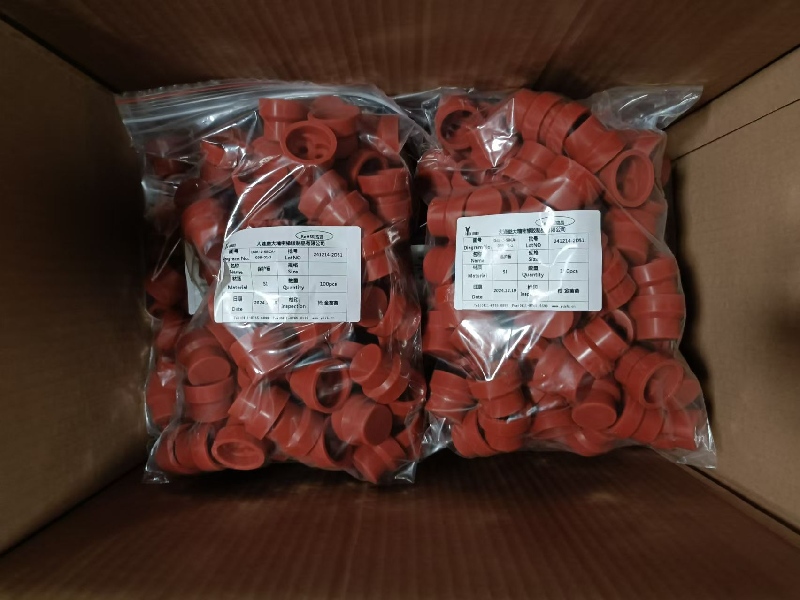
A seal removed from a failed assembly carried no visible number. The package label identified a shipping month, while production records covered several compounds, molds and post-cure loads. The investigation could test the part, but it could not quickly identify which other shipments shared its history.
Rubber component traceability matters because molded parts often look identical after a material, cavity or process change. A useful system connects the delivered quantity to the records needed for containment and cause analysis without marking the functional surface.
Start With the Field Part
The first question is what identity survives use. The assembly serial number may connect to a supplier lot even when the seal itself has no mark. Service date, position, photographs and orientation can preserve evidence that disappears when parts are mixed after removal.
Automotive seal traceability should define the smallest practical trace unit. That may be a production lot, post-cure load, shift, cavity or individual carrier. The choice depends on failure consequence, process variation and marking feasibility.
Move Back to the Assembly Lot
The assembly record should identify the seal lot, mating component revision, lubricant, station and relevant test result. If the part can be installed in more than one position, the record or error-proofing method should make that relationship clear.
Molded rubber part identification does not always require characters on the rubber. Cavity dots, carrier marks, labeled trays, barcode scans and controlled container quantities can preserve identity. The method must survive washing, post-cure and repacking.
Move Back to the Mold
Rubber lot tracking should connect the shipment to mold, cavity, press, recipe, operator or automated cell, and inspection record. A multi-cavity tool can produce a local defect that disappears in an average dimensional report.
When cavity separation is not practical, define the containment consequence. The plant may need to hold a larger population after one defect. Traceability depth is therefore an economic and risk decision as well as a data decision.
Move Back to the Compound
Compound records should identify formulation or approved code, mixer, batch, raw-material lots where required, cure characteristics and shelf-life status. If a material is externally mixed, the molder still needs an unbroken link between supplier certificate and molded shipment.
OEM rubber quality records should also capture approved deviations and substitutions. A correct lot number is not enough if the system cannot show which recipe revision, test limits and customer approval applied on the production date.
A Current Regulatory Signal
The European Commission states that a battery passport becomes mandatory on 18 February 2027 for covered EV, light-transport and industrial batteries. It will link information to the battery through a QR code and support lifecycle transparency. [1]
The Commission's August 2026 guidance organizes 71 data points by battery category and applicability. The obligation belongs to the economic operator placing the finished battery on the market, not automatically to every seal supplier. [2]
This boundary matters. The battery passport does not require an individual passport for each rubber gasket, but it increases pressure on the finished-battery data chain. Suppliers may be asked to provide accurate material, change and manufacturing evidence that supports OEM records.
Quality Standards Require Useful Records
ISO guidance on documented information notes that ISO 9001 may require evidence of unique output identification when traceability is required, along with authorized release, change review and nonconformity records. It does not prescribe one barcode format or retention period for every part. [3]
Rubber component traceability must therefore be designed around customer, legal and risk requirements. The procedure should state who creates each record, how errors are corrected, how long data remains accessible and how backup is verified.
Global Labels Need Shared Data
AIAG describes its Global RFID Item Level Standard as guidance for identification, verification and traceability of items, parts, components, modules and assemblies using approaches based on ISO and GS1 standards. [4]
A data carrier does not fix inaccurate master data. Automotive seal traceability needs consistent part number, revision, lot structure and supplier identity across shipping label, certificate, electronic notice and receiving record.
Test the Trace Before a Recall
Select one shipped lot and run a backward exercise. The team should find the customer shipment, packaging lots, inspection results, cavities, process window, post-cure load and compound batch within the agreed response time. Then run the trace forward to every affected shipment.
Challenge split lots, repacked containers, partial returns and reworked parts. These routine events often break rubber lot tracking. The test should reconcile quantities rather than only locate documents.
A second OEM rubber quality records review should verify meaning, not just availability. Units, limits, calibration status and revision must be clear enough for another site or customer team to interpret without the original operator.
Supplier changes should be tested through the same trace exercise before approval. A new compounder, post-cure location or packaging operation adds identifiers and handoffs. The updated system must still link a returned component to the correct process and material records.
For a Yida traceability review, provide the customer part structure, required trace unit, label standard, record-retention period, electronic data needs and containment time. That allows molded rubber part identification to be matched to process risk without marking or handling the part unnecessarily.