From Cabin Sealing to Battery Packs: New Rubber Sealing Demands in EVs
When you open an electric vehicle (EV) door, the door's rubber seal will be the first thing you'll see through the glass. The seal still has to block precipitation, fit the opening well, and let the door close without too much resistance.
But if you look under the car, the job of the rubber seal will be more complicated. The battery case gasket is a single large joint that is also very close to the cooling system's piping and electrical connections. It should collaborate with the enclosures pressure management system instead of just trying to make the housings as seal-tight as possible.
New demand for EV rubber seals is mostly due to this change of seal functions, which now are multiple seal duties within one vehicle. Therefore, specifications for each rubber seal will be different.
In the case of Hutchinson, its automotive product lines for bodies and roofs, heat management and electric drivelines are still separated. This highlights how the shift from combustion to electric will not result in only one kind of material requirement. This is why Hutchinson has decided to keep these different applications separate for its automotive product ranges.
In cooperation with Dalian Yida Precision Rubber Products Co., for example, Hutchinson considered the part drawings and mating assembly details as being most helpful. Getting to know the exact position of the part is more relevant than being introduced to an “EV-grade” formula right away.
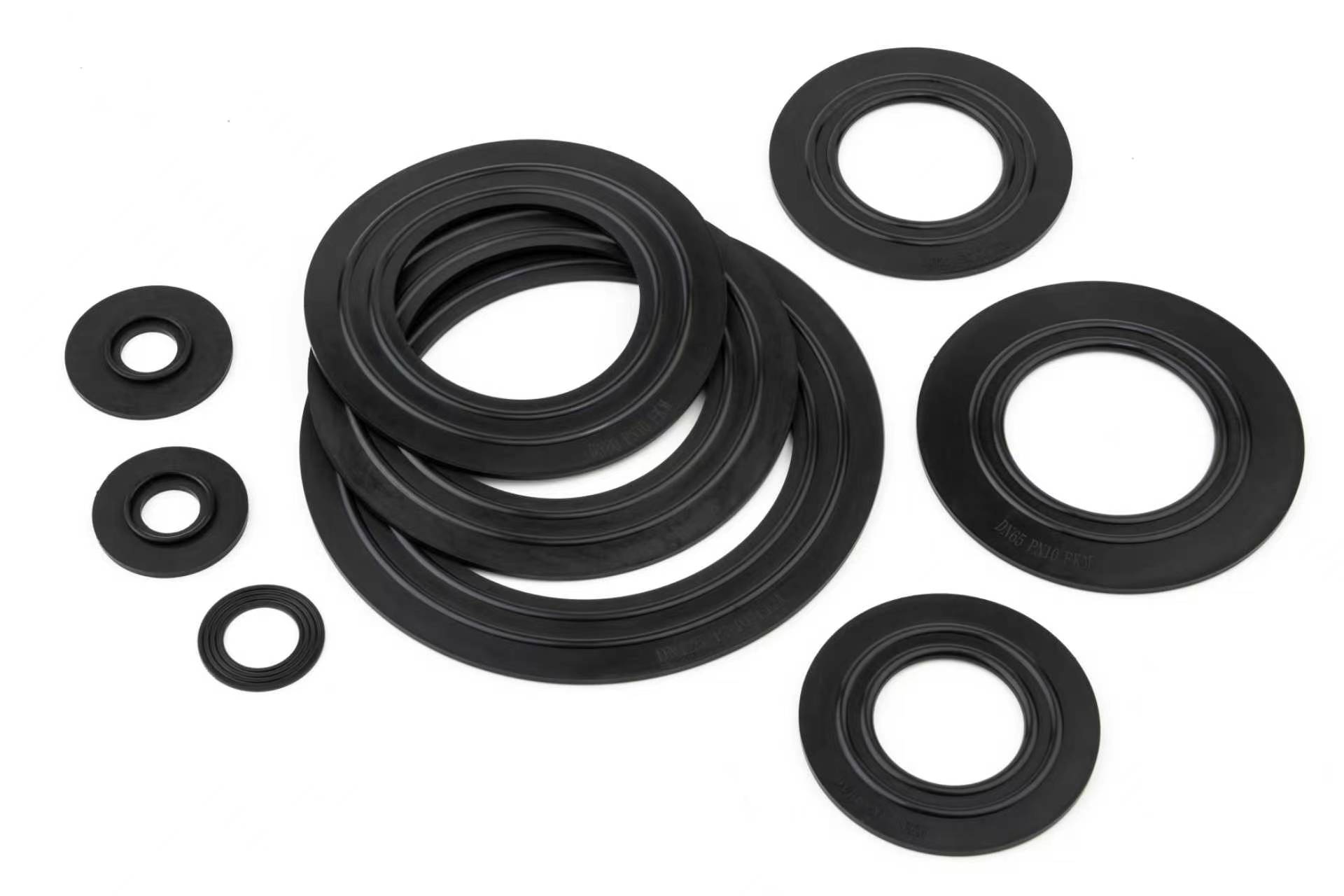
Although the main issue has already manifested at the door, the small details do matter.
Part of an electric vehicle cabin seal test is to check the driver's immediately noticed elements - if there is water inside the cabin, wind noise or if the door requires an unexpectedly firm push.
Rarely do such symptoms imply a material defect. A seal could be pressing the aperture unevenly, or a corner might act differently as opposed to the straight segment used in an initial inspection.
The cross-sectional shape, the location where it is fixed and the degree of compression are all very important factors. Simply hardening the rubber could make it harder to shut and yet fail to fix the local gap.
There are also parts and seams within the door assembly that a piece taken from the car body cannot cover. Hence, the success of a material test is merely the preliminary step. The mounted seal should be verified all around the opening of the car body.
The regular handling of the door brings up one more query: after closing and opening the door repeatedly, does the seal maintain its position? Can one spot rubbing, local deterioration or perhaps a part folding incorrectly?
Electric vehicle cabin sealing performance for different kinds of failure (water entry, closing effort and acoustic behavior), should be evaluated with separate criteria. Referring to a result as “good sealing” does not tell you the real situation behind the term and there still remain great possibilities open for interpretation.
A battery cover is a much larger joint
The role of the battery housing gasket is different from other gaskets in the car. It is normally compressed at the contact surfaces and the slight variation of the surfaces can change the extent of a sealing effect through its whole circumference.
A nominal gap is indicated on a drawing. But an assembled part will also reflect, for example, the flatness and the number of fasteners, the stiffness of the part, and the tolerances.
A wider gasket is not always the right solution. It may provide better contact one area but become over-compressed in another.
Therefore, a review of the battery pack sealing should include the evaluation of the joint and not only the gasket. It should be asked whether the selected profile will maintain appropriate contact both at the tightest and the loosest spots.
Preformed gaskets, molded profiles and formed-in-place systems also bring different assembly and service requirements. The choice should follow the enclosure design and production method.
Location | What the seal needs to do | What to check first |
Door or window | Control water and air leakage | Contact position, movement and closing effort |
Battery cover | Protect the enclosure against specified ingress | Gap variation, flange stiffness and compression |
Coolant connection | Retain the approved fluid | Fluid specification, temperature and pressure |
Electrical feedthrough | Protect the interface around the connection | Complete connector and mating geometry |
Venting device | Manage pressure while providing required protection | Normal breathing and emergency venting duties |
The table is also a handy tool for checking your purchase decision. If all the five locations you looked at suggest the same material with no questions, then a second look is probably a good idea for your application review.
Keeping water out doesn't mean preventing every gas exchange
A real-life vehicle application will help to explain this concept.
in November 2020 disclosed the production of its DIAvent pressure-compensation component for the ARCFOX α-T from BJEV. They showed their application combining normal pressure equalization with emergency venting.
This is a supplier case made public, not a Yida project. Its relevance lies in how responsibilities are divided within the battery housing.
A perimeter gasket aids in the protection of the joint. A special component regulates gas exchange under certain conditions. Simply compressing the gasket to seal doesn't replace the function of the second device.
Neither can we say here based on this example that one vent will work just the same on another battery design. We have to look at the battery, the vent arrangement and the enclosure as a whole.
When sealing battery packs, make sure to determine how pressure variations are handled through the joint/gasket interface prior to finalizing the gasket specification. The answer to this question could determine the type of forces that the joint is subjected.
The label is just a hint. The real name is what you need
Sometimes customers who are sourcing EV sealing ask for compatibility by saying a coolant is automotive with a temperature. That is insufficient for a compatibility evaluation. Ask for the approved fluid specification, concentration, and key additives of fluids. It would be wrong to recommend the water-glycol circuit the same way for an immersion-cooling setup. Don't forget about the operating pressure and temperature sequence. EV coolant seals must therefore be tested in conjunction with the fluid that is supposed to be used and realistic partner parts that mate on the seal. This should be clearly stated in the test report as well.
Read an IP result for what it actually covers
IEC 60529 classifies enclosure protection. ISO 20653:2023 addresses protection for road-vehicle electrical enclosures, including foreign objects, water and access. The customer specification should identify the required method and edition. IEC 60529, ISO 20653:2023
These are defined enclosure tests. They do not independently establish coolant resistance, battery life or protection against thermal runaway.
An IP result belongs to the tested assembly. It depends on the cover, gasket, fasteners, connectors and ventilation features—not the rubber component alone.
It also matters when the test is performed. An enclosure tested immediately after assembly has not necessarily demonstrated protection after the required aging or mechanical exposure.
Evidence | What it answers | What still needs checking |
Enclosure ingress test | Did this assembly meet the specified protection conditions? | Performance after relevant conditioning |
Fluid exposure test | How did the material change in the reported fluid? | Leakage in the actual connection |
Compression and recovery data | How did the rubber behave under the test loading? | Contact around the complete joint |
Thermal or mechanical cycling | How did the assembly behave through that sequence? | Conditions outside the tested range |
A revised cover or fastening arrangement may change the result even if the compound stays the same. Reports should identify the configuration clearly enough for later changes to be reviewed.
The seal must keep working after the first assembly
Initial contact is not the whole job. Rubber’s reaction force can change while it remains compressed, and temperature variation can change the dimensions of the surrounding joint.
This becomes important where a cover deflects between fasteners or mating parts expand differently. The gasket has to remain effective through those changes.
There is no single hardness value that settles the issue. A harder compound may demand more load; a softer one may deform too far in an unsupported area.
For EV rubber seals, material screening should follow the available compression space, assembly load, temperature and media. Useful test data is data that addresses those conditions.
The same caution applies to electrical and fire-related requirements. An elastomer should not be assumed to provide the necessary insulation simply because it is rubber.
A material flammability result is also different from a complete battery thermal-event assessment. If either property is required, identify the relevant test and acceptance criteria explicitly.
Test the production condition you intend to supply
A small sample trial is useful, but it can conceal differences in geometry or processing. Approval samples should represent the intended compound, component and production condition.
Start with inspection and controlled assembly. Record how the part fits before exposing the joint to the agreed operating sequence.
Stage | Practical review |
Sample inspection | Dimensions, functional surfaces and material identity |
Trial assembly | Fit, twisting, pinching and local compression |
Conditioning | Relevant fluid, temperature and mechanical exposure |
Functional testing | Leakage, ingress or other specified interface behavior |
Disassembly | Damage, displacement and permanent deformation |
Production review | Batch consistency and records supporting the approved condition |
The project sequence is straightforward:
Requirements → drawing and compound review → representative samples → assembly → conditioning → functional tests → disassembly → production approval.
This is a proposed workflow, not a regulatory test method. Conditions and responsibilities still need to be agreed with the customer.
For serviceable joints, include removal and reassembly. A gasket approved for its first installation is not automatically approved for reuse.
Changes after approval need similar care. A compound substitution, profile adjustment or processing change may affect the evidence supporting the original result.
What makes a useful inquiry
For custom rubber components for EVs, identify the interface before choosing the material. Is the part protecting a door opening, retaining coolant or sealing a battery cover?
Send the drawing, mating geometry and operating sequence. Where a fluid is involved, provide its actual specification. Where a customer test is required, include the method and acceptance limit.
For a project discussed with Yida, these details provide the basis for agreeing material requirements, sample conditions and finished-part validation. Performance claims should remain tied to the application evidence.
Custom rubber components for EVs do not all need the same properties, or the most expensive compound. They need the right properties in the right joint.
That is the main shift from cabin sealing to battery packs: more distinct duties, more interfaces to review and less room for a general material label to stand in for a complete specification.