Why Integrated Rubber Components Are Replacing Multi-Part Assemblies in Some Applications
A decision record for combining seals carriers limiters and locating features without creating a harder failure
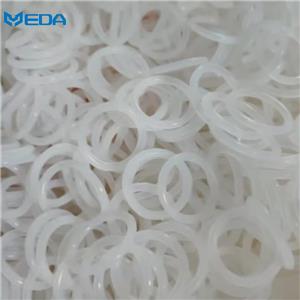
The original assembly had a loose O-ring, a machined groove, a washer, two locating pins and a work instruction telling the operator where the seal liked to escape. The redesign proposal replaced that collection with one carrier and a molded sealing edge. The drawing became more complicated while the station became simpler.
This trade explains the growing use of integrated rubber components. The objective is not to achieve the lowest item count on paper. It is to place flexible material, rigid support and locating features where they prevent a known assembly or performance problem.
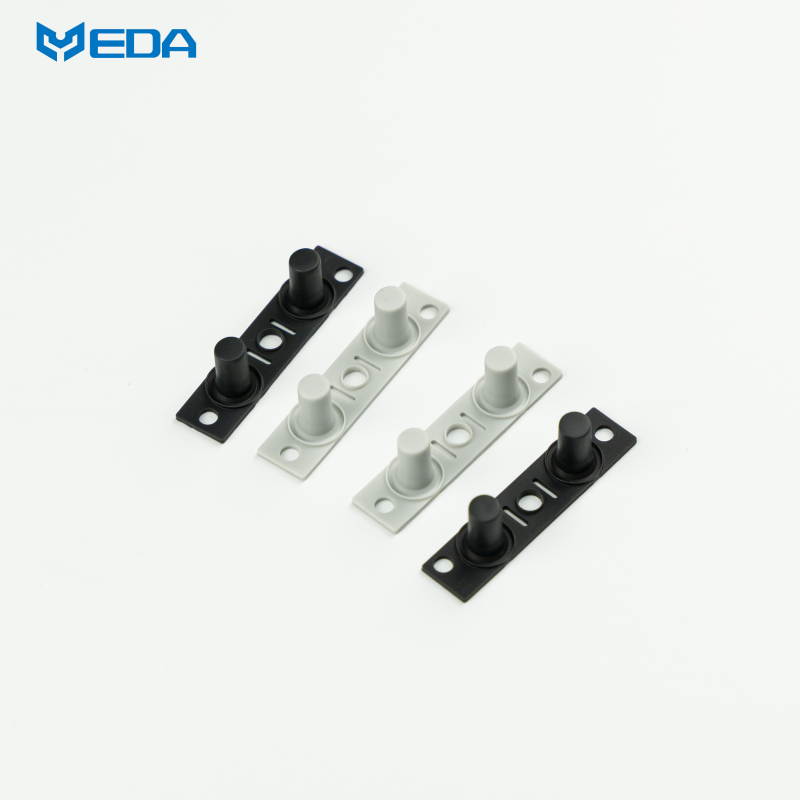
The Case for Combining Parts
Loose seals demand separate purchasing, stock keeping, counting and delivering. During installation, they can actually be omitted, doubled, twisted or cut.
By a carrier, for instance, the sealing element is kept in its desired shape and in bolt holes or in visual features are made that enable installation to be confirmed more easily.
A one-piece sealing solution can also eliminate groove machining on the mating hardware. Of course, the gain only materializes if the combination of the new carrier and the bond do not create an intolerance situation or a more expensive inspection problem. Therefore, consolidation must shift or at least move complication to the process of fabrication which has the best chance of containing that complexity. That way it does not result in higher scrap rates but actually improves process yield.
A Published Enclosure Redesign
Parker gives an example of an aerospace guidance-and-control enclosure that previously had an O-ring installed. Problems with leak testing lead to repeated checks of the surface finish and installation of the O-ring.
As an alternative to the existing solution, the supplier came out with a new design - an enclosed one-piece overmolded part using Gask-O-Seal technology. According to the manufacturer, assembly time as well as time spent for fixing mistakes was significantly decreased. Furthermore, simpler groove requirements and less leak points, foreign-object risk being lower, and grease removal from the assembling were reported as benefits.
Unfortunately, this public story of the successful use of a combination of different rubber components for the sealing purpose does not serve as evidence that all loose seals need to be bonded to a plate.
One could suppose that the original failures, enclosure configuration, and pressure of cleaning were just the factors why integration was good for that particular design.
Where the Complexity Moves
Over-molding of rubber brings in several options that would have been unnecessary if the seal was left loose. It must make sure that an insert made of rigid plastics or metals will not only be clean and dimensionally stable but also properly positioned in the mold.The molding step should take care of the rubber so it reaches every designed edge and does not leave behind contamination. Also, the process needs to safeguard bonding interfaces against contamination and physical damage caused by mold release agents, oil or hands.
A carrier made of metal or plastic also is involved in the tolerance chain of the seal. Flatness, accuracy of positioning the holes, differential expansion caused by heat can all lead to changes in the degree of compression around the perimeter of the sealed area. Even if a carrier allows for a simple installation it is possible for such a carrier to cause a corner of low compression if, for instance, between the fasteners the flange bends.
Bonding Is a Designed Interface
Rubber to metal bonding may involve surface preparation, primer or adhesive, molding pressure, cure and post-cure. Each stage needs limits and traceability. A pull test result from one coupon does not automatically represent a thin edge near a pierced hole on the finished carrier.
ASTM D429 contains several methods for comparing rubber adhesion to rigid substrates. The applicable method depends on specimen form and loading. It can support compound and process comparison, but the finished component may see peel, shear, fluids, temperature cycles and local stress not reproduced by the standard specimen. [3]
Integration Can Improve Error Proofing
Parker's Integral Seal material explains that a rigid carrier can support molded sealing elements, multiple ports and visible installation. The supplier also notes that carrier and elastomer selection depends on media, temperature, pressure and motion history. [2]
When a line uses vision inspection, a metallic outline or keyed carrier is easier to detect than a dark flexible ring inside a recess. Bolt-retention features can keep the gasket attached during transport. These are assembly controls, not material properties.
Integration Can Also Reduce Serviceability
A technician can replace a standard ring without discarding a large carrier. An integrated part may require replacement of the complete unit after a small seal defect. The decision should consider field access, diagnostic method, spare-parts strategy and whether the carrier can be reused safely.
The same issue appears during manufacturing. If a bond defect rejects a costly insert, scrap value increases. Repair rules must be defined before production. Uncontrolled adhesive touch-up or local remolding can hide a weak interface and break traceability.
The Qualification File
Start with the baseline assembly. Record components, operations, common errors, leak paths and total installed cost. The proposed integrated design should state which failure each new feature prevents. Without that link, the project can become an attractive drawing with no measurable manufacturing advantage.
Test production-intent carriers and molding. Inspect insert position, rubber fill, bond continuity, flash and critical dimensions by cavity. Age parts in relevant fluids and temperatures, then test leak, pressure cycling, torque relaxation and disassembly. Section samples where hidden interfaces matter.
A second application of rubber overmolding is justified when the carrier controls compression or orientation that operators previously controlled by feel. That is also when a one-piece sealing solution may reduce variation instead of merely reducing purchasing lines.
Before approving consolidation, photograph and time the existing multi-part rubber assemblies through receiving, kitting, installation and leak testing. Those observations create a baseline for the new design and reveal whether the dominant loss comes from handling, machining, inspection or field service.
The new part should then be trialed at normal line speed with production operators and automated equipment. Record installation force, fault recovery, visual confirmation and damaged-part disposition. A laboratory leak pass does not show that the consolidated component can move through the factory without creating new delays.
Yida can review integrated rubber components when the customer provides the current assembly, mating hardware, load path, media, temperature, service method and expected volumes. For rubber to metal bonding, include substrate grade, coating and corrosion requirement so the interface can be developed as part of the component.