New Sealing Challenges in Next Generation Hydrogen Fuel Cell Vehicles
How permeation pressure cycling temperature and stack chemistry reshape elastomer requirements in hydrogen vehicles
Hydrogen sealing challenges stem from different service environments. The storage and delivery system contain compressed gas, valves and pressure reduction. On the other hand, the fuel-cell stack has to separate hydrogen, air and coolant through many repeating cells. A suitable material for one area can also be unsuitable for another one.
For that reason, hydrogen fuel cell vehicle seals have to be tailor-fit requirements of each part of the vehicle. Each connection should have its pressure, temperature, chemistry, movement and leakage limits clearly indicated. Reliance on a single H₂-compatibility sign could disguise important divergences from the stack gasket to a high-pressure valve seal.
New Standards Reflect a System of Components That Is Even More Diverse
ISO 19887-1:2024 refers to newly produced compressed-hydrogen fuel-system components for land vehicles which are to be valves, injectors, regulators, sensors, lines, filters, fittings among others. It considers pressure classes as high as 70 MPa, i.e., it is quite challenging pressure-wise, and it qualifies the parts the way the real parts are.
Because the standard considers safety and functionality at the component level, it is an appealing choice as a current hook. However, it is far from being a golden rule for hydrogen, and there are some vehicle systems that have already been regulated that the standard does not take into account. The main regulation applicable and the category of the component still have to be determined.
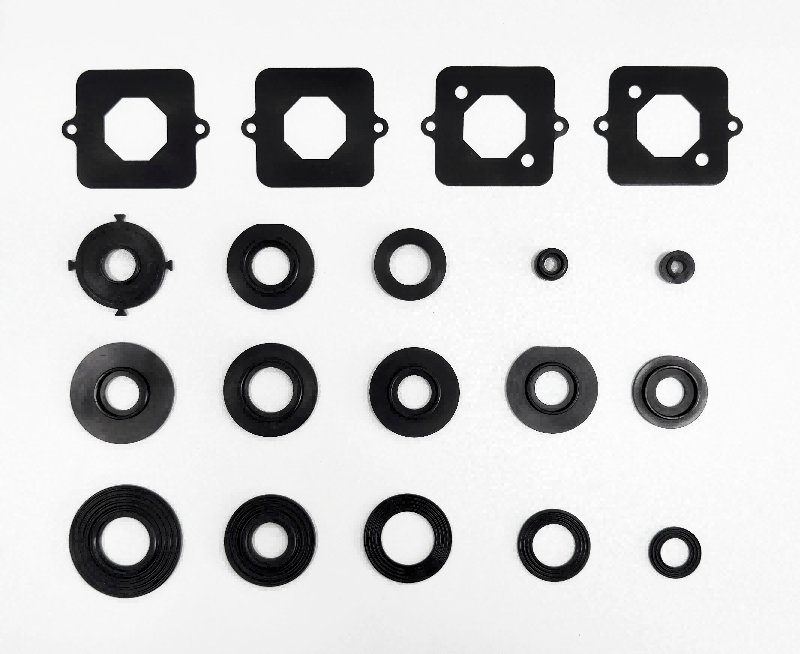
Permeation and Leakage Are Separate Issues
Hydrogen molecules will penetrate many kinds of polymers. Permeation is a movement process while leakage can happen simultaneously if there is damage or bad compression on the interface. Even a very low measure of material permeability cannot fix a badly ground groove, scratched fittings, or assembly cut.
High pressure hydrogen seals are required to maintain contact regardless of pressure changes and hardware movements. Stiffness and dimensions will depend on the temperature that is used for filling and pressure reduction. The plan for validation must determine the leakage rate of a complete system at the different pressure and temperature points needed.
ASTM D1434 is one standard which determines the gas transport through the plastic film and sheeting under controlled conditions. It works well when a material is compared and a flat specimen doesn't mean the performance of real seals like an O-ring, bonded gasket or valve seat. The seal will still include the final geometry and surface condition.
Variance in Speed of Pressure Change Can Affect Material Integrity
When the gas under pressure enters the elastomer, if the pressure is released too quickly the trapped gas inside the material will expand and cannot escape fast enough. It is very likely that such a pressure change results in a blister on the surface, a crack inside the material or a surface damage. This risk greatly depends on the polymer's composition, the pressure level, the temperature, the time of exposure, and how fast is the decompression happening.
Besides hydrogen service, elastomers must be assessed for use under varying pressure cycles other than one single soak test.
It has been identified that vehicle parts can undergo cycles of filling, running and shutdown over and over again. It is important to note that apart from the peak pressure, the sequence, residence time and the speed of change of pressure may have a significant impact also.
US Energy Department stated that seal failures due to hydrogen saturation and friction wear were found in the study of hydrogen compressors' reliability that involved plastic and elastomer seals.
That program, publicly funded, focuses on hydrogen infrastructure not a Yida vehicle project though failure mechanisms identified in a sealed moving high-pressure scenario are similar.
The Different Chemical Nature of the Fuel Cell Stack
DOE mentions that gaskets in fuel cell stacks not only have a gas-tight separation function between adjacent bipolar plates but also a part that can cool. The very small seals, in addition, must manage cross-leakage without violating the compression of the stack or manufacturing tolerances.
Fuel cell stack gaskets can withstand very acidic conditions and water, heat and a mixture of other chemicals from adjacent components. Any substances leached or degraded may react with nearby parts.
Material screening is essential and should consider both the retention of sealing characteristics and possible contamination of the electrochemical system.
ADOE-backedFreudenberg-NOK initiative created a custom elastomer for PEM fuel-cell seals since conventional seals might crack and release compounds that go to other parts. This is an example of free public development not a comment on every silicone formula or current vehicle design.
Thin Geometry Magnifies Tolerance Problems
Stack seals often repeat around flow fields and ports. Small thickness variation can change local compression when hundreds of interfaces are clamped together. Flash, mold mismatch and uneven plate flatness may create paths for gas or coolant even when the bulk material meets its specification.
Fuel cell stack gaskets may be molded separately, dispensed or bonded to another component. Each method has different controls for location, cure, adhesion and surface cleanliness. The validation sample should represent the intended production process.
Material Families Need Compound Level Evidence
FKM, EPDM, silicone and other elastomer families may be considered in hydrogen systems, but the polymer name alone cannot establish suitability. Fillers, plasticizers, cure systems and processing affect permeability, extraction, low-temperature response and resistance to pressure cycling.
Elastomers for hydrogen service also need compatibility with assembly lubricants and cleaning residues. A lubricant may reduce installation damage but change swelling or permeation. Any substance that remains at the interface should be included in the review.
What Standards Establish and What They Do Not
For instance, the standards ISO 19887-1 define specifications for the components like the parts of defined hydrogen compressed fuel systems.
In general, Hydrogen fuel quality, is described by ISO 14687. The aforementioned standards documents contribute towards the system framework yet it is the individual responsibility of material approval of all vehicle seals.
ASTM D471 offers comparative information in case of liquid exposure on one hand. Meanwhile, ASTM D412 defines tensile properties on the other. The results gained can be used to ensure that the compound is well controlled. However, they are unable to demonstrate hydrogen permeation, or resistance to rapid gas decompression, or leakage from the seal in different configurations, or the durability of the stack.
Sealing of hydrogen is a challenging issue which has to be addressed at the components' level through tests only. The tests of material are the inputs; the actual final seal shape, hardware, and operating cycle must yield the evidence.
An example of a complete component validation
Compound identity, dimensions and surface inspection should come at the very beginning step. The representative hardware should show groove fill, compression and installation condition.
In the case of bonded or overmolded parts, it's the interface where the inspection should start and the tolerable edge condition should be defined.
The leakage check in the specified pressure and temperature points (also including pressure increase phase and controlled decompression phase) should be carried out in the case of a hydrogen seal under high pressure conditions. Repeat the cycle to the specified number of times and inspect the seals for cracks, blisters, extrusion, and permanent deformation.
In the case of stack seals, you should test the gas and coolant separation under a realistic combination of temperature, humidity and compression. Where there is a risk of contamination, include chemical-aging and extraction work. Instead of the initial assembly only, thickness and leakage should be checked and sealed force should be monitored after multiple cycles.
Whenever a variation in a compound, thickness, a bond, or a surface or a mating hardware element occurs that could interfere with the integrity of a qualified material, it should, at a minimum, be compared against the original specifications and not allowed unless it does not have any negative implication on the performance of the final product. Since traceability is key, a small change in the formulation of a substance could lead to major change in the behavior of gas and the effect of chemicals.
Development Stage: What Must You Know?
The location of the seal, gas purity, pressure range, rate of decompression, temperature cycle, leakage limit, and the expected lifespan of the seal should be determined first. The other factors such as surface finish, groove dimension, lubricant, assembly, and the vehicle regulations that apply should also be provided.
It all hinges on a successful design to prevent these environments from getting mixed up. The design also needs to detect the most common reason of failure and put the end product to the test under the right pressure and chemistry.