NBR O Ring Temperature Range: What Buyers Need to Check
An equipment drawing specifies NBR, and the purchasing specification includes the operating temperature. One supplier quotes a maximum temperature of 100°C, while another lists 125°C.
Which one should the buyer choose?
Before comparing the quotations, it is worth checking what those temperature limits actually mean. They may refer to different NBR compounds, testing conditions or expected service life. A catalogue temperature rating alone cannot tell you whether an O-ring will maintain a reliable seal in your application.
For buyers checking the temperature range of an NBR O-ring, a few details matter more than the highest number on a datasheet: the normal operating temperature, any short-term temperature peaks, the fluid in contact with the seal and whether the application involves movement.
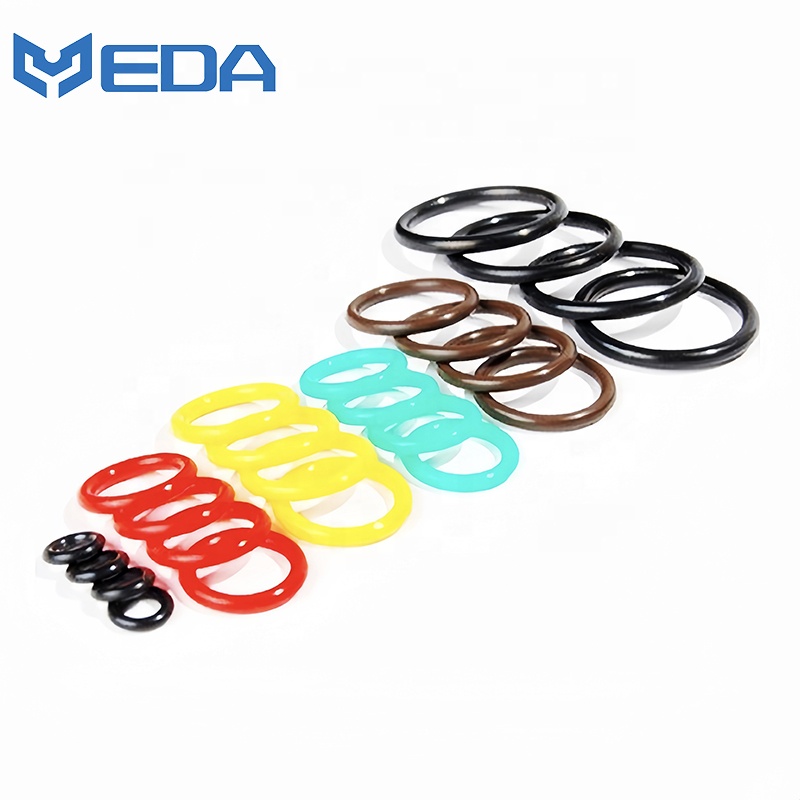
Why Published NBR Temperature Ranges Differ
NBR, also known as nitrile rubber or Buna-N, covers a range of rubber compounds with different properties. Two NBR O-rings may look identical but behave differently when exposed to high or low temperatures.
Supplier catalogues are a good place to start, although the figures need some context. Different compounds and test conditions can give different temperature limits.
Here are three examples from published supplier information.
| Published reference | Temperature range | What to check |
|---|---|---|
| Trelleborg O-ring catalogue, selected 70 Shore A NBR grades | −30°C to +100°C | The range applies to specific grades |
| Apple Rubber general applications guide | −40°C to +125°C | The figures are given for dry heat |
| Parker general-purpose nitrile product guidance | Up to +100°C; shorter life at +121°C | Higher temperatures may reduce service life |
Sources: Trelleborg catalogue, Apple Rubber guide, and Parker product information.
These figures are not necessarily contradictory. Each supplier is describing its own materials or general guidance under particular conditions. None of these ranges, on its own, tells us how long an O-ring will seal reliably in a specific machine.
For a general-purpose NBR O-ring, −30°C to +100°C is a reasonable range to start discussing with a supplier. Some compounds can work outside this range, but the material and operating conditions need to be checked first.
One common mistake is to take the lowest temperature from one supplier and the highest from another, then treat both as the limits of the same NBR compound.
At the Hot End, Duration Matters
A specification might simply state "Maximum temperature: 120°C."
That is not enough information to select an O-ring.
The fluid could be at 120 degrees Celsius. That does not always mean the O-ring itself gets to that same temperature.
Over time, heat can change the way rubber works. The O-ring might appear to be in good condition when it is taken out but it might not go back to its original shape after being compressed. This is why compression set is important, in situations where the seal is kept compressed for a long time.
If the rubber loses much of its ability to recover, sealing contact could get worse when the machine cools down or when the working conditions change. You cannot determine its remaining service life just by looking at it.
A Public Product Example: Parker N0674-70
Parker's N0674-70 is a general-purpose nitrile compound with a hardness of 70 Shore A. According to its published product information, it can be used up to 100 degrees Celsius while service at 121 degrees Celsius comes with a shorter expected service life.
For a buyer comparing quotations, that difference is important. If a supplier recommends an NBR O-ring for use at 120 degrees Celsius, it's worth asking how long the seal is expected to operate at that temperature.
The Parker figures are included here as a published product example, not as Yida test data or a customer case. Other NBR compounds may behave differently, so these figures shouldn't be treated as a guarantee for another manufacturer's material.
Two suppliers might both quote NBR for the application but one may be assuming occasional heat exposure while the other is considering continuous operation. That needs to be clarified before choosing between them.
Cold Starts Can Expose a Weakness
Some O-rings seal properly once a machine has warmed up but struggle during a cold start.
At low temperatures, rubber becomes less flexible. What matters is whether the seal can still recover and maintain contact with the surrounding surfaces. A sample that doesn't crack when frozen hasn't necessarily proved it can seal under those conditions.
The application also makes a difference. An O-ring held in a joint doesn't experience the same conditions as one used in a moving assembly or exposed to repeated pressure changes.
TR10 is one way to compare the low-temperature behaviour of compounds. ASTM D1329 measures how rubber retracts as the temperature rises after cooling and stretching. It gives information about the material but it doesn't tell you whether a complete assembly will leak.
If a supplier provides a TR10 value, check that it comes from the proposed compound rather than a general NBR chart.
For equipment that starts in cold conditions, testing should include a cold soak and the following startup. Testing only after the system has warmed up could miss a problem that occurs during use.
It's also worth considering what the seal has been exposed to before the start. Rubber that has spent time in oil, for example, may behave differently from a new O-ring when the temperature drops.
Reference: ASTM D1329.
Better Oil Resistance May Reduce Cold Flexibility
Not all NBR compounds offer the same balance of oil resistance and low-temperature flexibility.
The amount of acrylonitrile (ACN) in the rubber is one reason. Generally, higher ACN content improves resistance to petroleum oils and fuels, but the rubber becomes less flexible at low temperatures. The plasticizers and curing system used in the compound can also change its performance.
Apple Rubber discusses these differences in its nitrile compound composition guide.
This is something to keep in mind when selecting an O-ring. A compound with better low-temperature flexibility may not be suitable if it swells too much in the fluid being sealed. Both conditions need to be considered.
Hardness is another part of the selection. Apple Rubber lists nitrile compounds from 40 to 90 Shore A, with 70 Shore A being a commonly used hardness.
That doesn't make 70 Shore A the right choice for every design. A harder O-ring won't automatically handle higher temperatures, either.
The pressure, clearance between mating parts, groove dimensions and installation method all affect which hardness makes sense for a particular application.
Reference: Apple Rubber material selection guide.
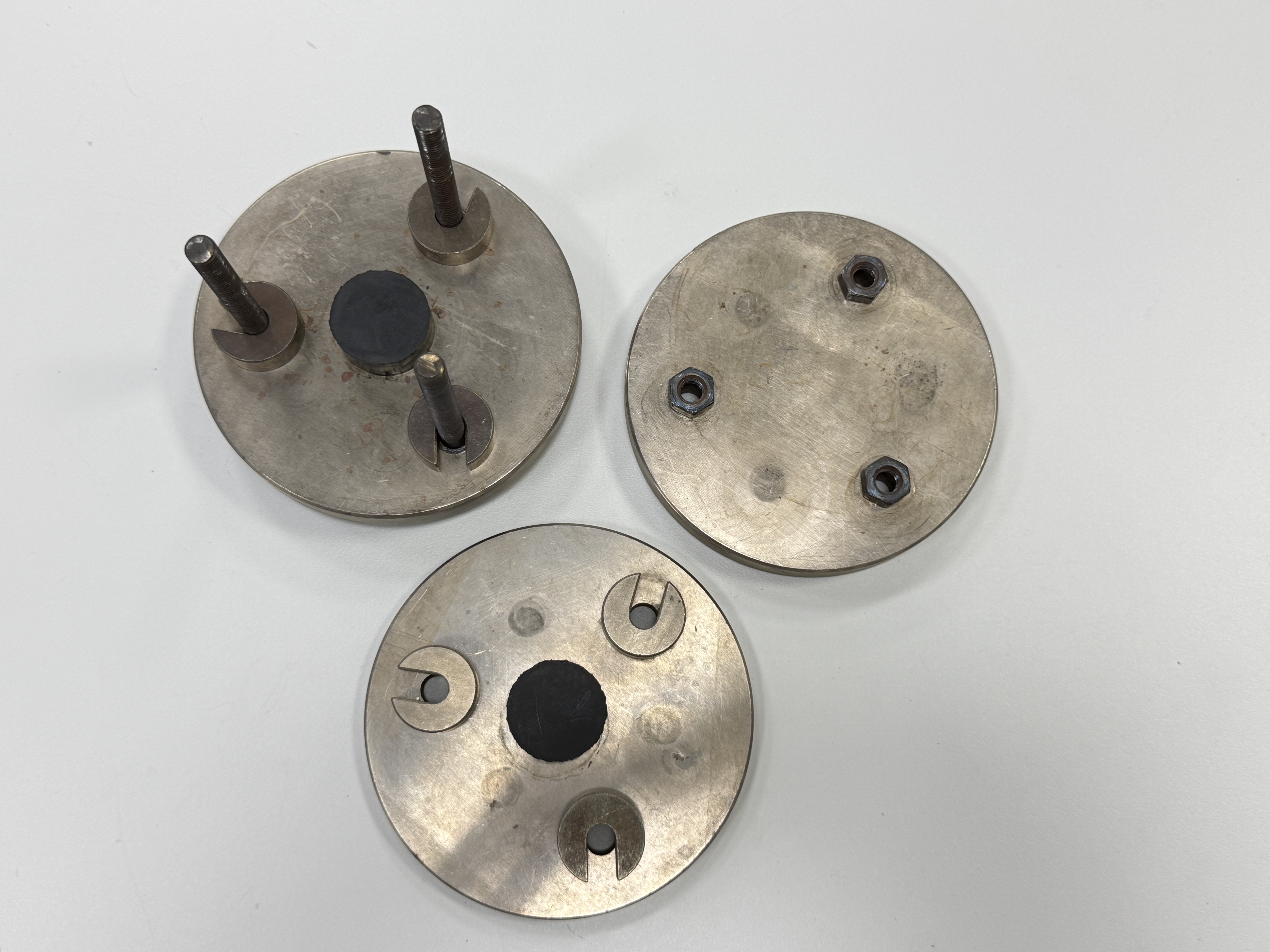
Read the Temperature Requirement Alongside the Fluid
The NBR O-ring temperature range on a dry-heat chart cannot establish suitability in hot oil, coolant or a cleaning solution.
Specify the actual fluid, including its grade, concentration and relevant additives. “Hydraulic oil” may be sufficient for an initial conversation, but it is a weak basis for final material approval.
Also identify occasional contact. Assembly grease, flushing fluid and maintenance chemicals can be absent from the normal operating description yet still reach the seal.
| Operating condition | Information needed before approval | Evidence to request |
|---|---|---|
| Continuous hot-fluid exposure | Fluid specification, seal temperature and required life | Compound-specific compatibility and ageing results |
| Outdoor cold starts | Minimum soak temperature, soak duration and startup sequence | Low-temperature material data and cold-start leakage results |
| Repeated heating and cooling | Temperature endpoints, dwell periods and pressure sequence | Assembly testing through representative cycles |
| Moving or pressure-pulsing service | Motion, lubrication, pressure changes and clearances | Functional testing under the relevant combined conditions |
This review prevents a common mistake: approving the material for temperature and the material for fluid separately, without checking their combined effect.
Which Tests Help—and What Do They Leave Unanswered?
A report that says “ASTM tested” is incomplete without the method, specimen, exposure conditions and acceptance limits.
The following methods answer different questions.
| Method | What it helps evaluate | What it does not establish by itself |
|---|---|---|
| ASTM D471 | Changes caused by liquid exposure | Leakage or service life in the actual assembly |
| ASTM D573 | Changes in physical properties after air-oven ageing | Performance in a particular hot fluid |
| ASTM D395 | Compression set under specified conditions | Complete dynamic sealing performance |
| ASTM D1329 | Low-temperature retraction behaviour | Leak-tight operation during the equipment’s startup sequence |
Sources: ASTM D471, ASTM D573, ASTM D395 and ASTM D1329.
These are test methods, not universal pass/fail specifications. The applicable customer specification must define the required limits and conditions.
When comparing compression set results, check the test method, temperature, exposure time, specimen and recovery conditions. Two percentages are not directly comparable merely because both reports cite ASTM D395.
The same discipline applies to immersion results. A small volume change in a reference liquid does not automatically establish acceptable behaviour in the customer’s working fluid.
Move from Material Screening to Finished-Part Validation
A practical approval sequence is:
Define the duty → screen compounds → test production-intent rings → condition in relevant heat and fluid → check cold starts and hot operation → inspect → approve pilot production.
Agree the leakage limit before testing. Record pressure, temperature, test medium, measurement method and timing.
Inspect the rings after testing as well. Changes in dimensions, surface condition and compression set can help explain a result that a final leak measurement alone does not reveal.
The cycle count and exposure duration must come from the application and customer requirements. There is no single test duration that proves every NBR seal suitable.
What to Include in a Custom O-Ring Inquiry
A useful inquiry for custom O rings gives the manufacturer enough information to question an unsuitable requirement before samples are made.
Include:
Drawing revision, ring dimensions, tolerances and groove details.
Minimum, normal and maximum seal temperatures.
Duration and frequency of temperature peaks.
Actual fluids, lubricants and cleaning agents.
Pressure, pressure cycling and any relative movement.
Required life and allowable leakage.
Proposed hardness, compound designation and customer specifications.
Sample quantities, annual demand and traceability requirements.
If you haven't decided on a specific NBR compound, it's better to ask the supplier for a recommendation. Simply giving a temperature range may lead different suppliers to quote different materials.
For custom O-rings, the drawing is just as important. Let the supplier know which dimensions must remain unchanged and whether the groove design can still be adjusted. Changing the rubber compound won't necessarily solve a problem caused by the seal or groove geometry.
At Yida, we review custom O-ring requirements based on the application, drawing and material specifications. This helps us consider the compound, tooling, finished dimensions and inspection requirements together, rather than dealing with each one separately.
Before moving into production, make sure both sides have agreed on the compound, testing conditions and how material changes will be handled. Even if a replacement material is also called NBR, its performance may not be the same.
If you're looking for custom NBR O-rings, send us your drawing along with the fluid details and operating temperatures, including any short-term peaks. With that information, we can better understand the application and discuss suitable material options.
Published NBR temperature ranges are useful when comparing materials, but they are only a starting point. What matters is how the selected compound performs in the actual application.