How Custom Rubber Components Improve Assembly Efficiency in Automation Equipment
What changes when the rubber part is designed for the robot cell as well as the finished machine
A robot can place a steel washer in a fraction of a second and still lose the cycle while waiting for a soft seal to arrive in the correct orientation. The press may be fast. The rubber part may be inexpensive. The cell slows because flexible parts stick together, fold, roll or hide from a vision system.
That is the practical link between custom rubber components and productivity. The useful design is not limited to the seal, cushion or diaphragm after installation. It also considers how the part leaves the mold, travels through packaging, separates in a feeder, presents to a gripper and confirms its position.
The First Delay Appears Before Pickup
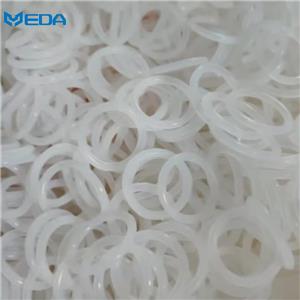
Loose seals often arrive as a tangled mass. Static attraction, surface tack and a low ratio of stiffness to weight can defeat bowl feeding that works well for metal parts. An operator may shake the container or separate parts by hand. Those seconds rarely appear in the original component drawing.
A review of assembly efficiency in automation should therefore begin at presentation. Ask whether the part nests with another part, whether two pieces can interlock, and whether its resting orientation is predictable. Tray pitch, bag quantity and release treatment can matter as much as nominal diameter.
Pickup Requires a Stable Feature
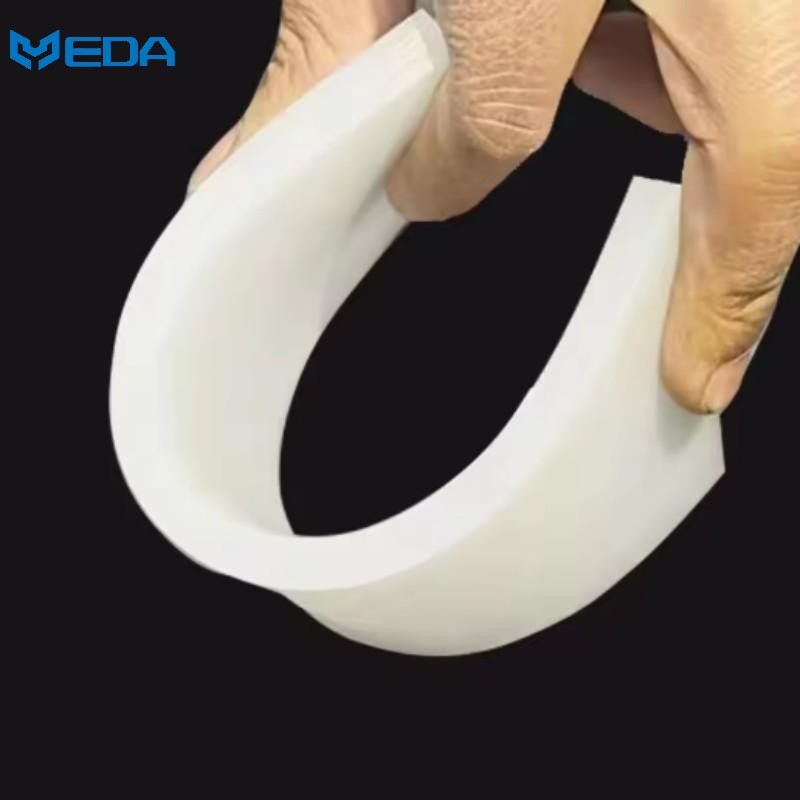
Vacuum cups need an area that will seal. Fingers need an edge they can locate without permanently deforming it. A thin lip that performs well in service can be a poor handling surface. Good rubber component design may add a temporary handling tab, a stiffer carrier or a protected pickup zone away from the working edge.
The added feature must have a documented purpose and removal rule. A tab that tears inconsistently can create particles or leave a surface defect. A carrier that remains in the product changes stiffness and thermal movement. Handling features need the same design review as the functional rubber.
Insertion Is Usually a Geometry Problem
When a seal rolls during insertion, increasing robot force may only damage it faster. Lead-in radii, chamfers, groove access, part symmetry and lubrication determine whether automated assembly equipment can repeat the motion. The gripper path should be tested at normal tolerance extremes, not only with a carefully selected sample.
Keyed shapes can prevent reversal. An integral metal or plastic carrier can keep a flexible perimeter flat. A local rib can provide retention before the mating component arrives. These decisions can raise part cost while reducing fixtures, stops and rework in the full cell.
A Public Example From the Production Line
At the 2025 MD&M West event, SIMTEC described an O-ring application in which it inserted the ring into the assembly during production so the customer did not have to perform that step. The published account does not provide the customer's takt time or savings, so it should be read as a process example rather than a universal business case. [1]
A separate SIMTEC case involved a small liquid-silicone one-way valve for an ophthalmological handpiece. Independent secondary slitting would have introduced orientation and alignment problems. SIMTEC built a system that removed the parts robotically, located them in a fixture, slit them inline and conveyed them into an ISO Class 8 cleanroom. [2]
The second case shows why molded rubber parts cannot always be optimized apart from the next operation. The molded geometry, material's self-healing behavior, robotic removal, locating fixture and slit position formed one process. Moving only the molding step would have changed the quality risk.
Confirmation Must Be Designed In
A camera cannot confirm a black ring inside a dark recess if the edge disappears in shadow. Force monitoring may detect gross obstruction but miss a twisted lip. A visible carrier, contrast mark or measurable final height can give the cell a reliable confirmation feature without touching the sealing surface.
Confirmation also changes the fault response. The control plan should state whether the cell rejects one assembly, stops the line or requests manual review. A sensor signal is useful only when its detection capability has been challenged with known missing, doubled, rolled and damaged parts.
Tolerance Standards Do Not Set the Functional Limit
ISO 3302-1 provides dimensional tolerance classes for moulded solid-rubber products within its scope. It excludes precision toroidal sealing rings and does not decide which dimension controls a particular insertion. A purchased tolerance class cannot replace a functional stack analysis. [3]
For automated assembly equipment, measure the features that affect presentation and placement as well as final performance. Define the conditioning time, free or restrained state, probe force and datum method. Soft parts can produce different readings when those details change.
Release the Part and the Cell Together
A useful trial runs production-intent molded rubber parts through production-intent packaging, feeding, pickup and insertion. Record the causes of every stop. Include cavity identity, material batch and surface condition so a feeding problem is not dismissed as random operator behavior.
Then test the installed assembly for sealing, retention, noise control or motion as required. Assembly success is not proof of service life, and a material coupon is not proof that the robot placed the part correctly. The evidence has to connect both stages.
The second use of custom rubber components is often where the largest opportunity appears: combining retention, orientation or cushioning with the main function. This can improve assembly efficiency in automation when the added geometry remains moldable and inspectable.
For a Yida review, send the part drawing together with packaging, feeder, gripper, insertion path, takt target and known faults. That information lets rubber component design address the complete assembly route rather than treating the component as an isolated shape.