Precision Molded Rubber Protective Caps for Automotive Components
How fit temperature cleanliness retention and removal determine whether a protective cap works through production and transport
A protective cap may be temporary, but the requirement it protects is often permanent. Paint on a joint, dust in a fluid port or damage to a sealing surface can stop assembly or create a later leak. The cap must stay in place through the process and then come off without leaving contamination.
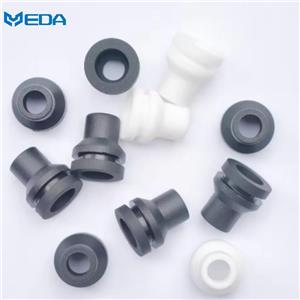
Molded rubber protective caps are used on ports, shafts, connectors, ball joints, brake components and other shaped features. A custom design becomes valuable when a standard cap is too loose, stretches unevenly or covers the wrong area.
Define What the Cap Must Exclude
The first question is whether the cap blocks dust, water, coating, blasting media, machining chips or handling damage. Each hazard creates a different closure requirement. A cap used as a paint mask may allow pressure equalization, while a shipping cap may need to resist wash water and vibration.
Automotive component protection also needs a time window. A part may remain capped for minutes on a coating line or for months through storage and overseas transport. Temperature cycling and material relaxation can change retention during that period.
Fit Depends on the Mating Feature
A cap can grip an outside diameter, lock into a groove or seat against a shoulder. Ovality, casting draft, threads and surface roughness affect the real contact. The tolerance stack should include both the cap and the protected component.
Custom rubber caps should be installed without sharp tools or excessive stretching. A deep undercut may improve retention but make removal difficult. A pull tab can help operators, provided it does not snag during transport or create a tear at its root.
Color and marking may support line identification. They should be placed where ink, laser marking or raised text cannot interfere with the sealing edge. If the cap is reusable, identification must remain legible after the specified cleaning cycle.
Coating and Heat Create a Different Application
Rubber masking caps must cover the exact area that must remain free of paint, powder coat, e-coat or plating. The edge should not lift under air flow, spray or thermal expansion. The material must tolerate the full oven profile, not only the nominal set temperature.
A published Harman case involved a Tier 1 automotive supplier that needed a cap to protect the ball portion of a ball-and-socket part during powder coating. The initial high-temperature vinyl design was later changed to silicone when oven exposure could reach a higher temperature.
The supplier reports that prototypes were used to confirm fit and function before production. This public case is not a Yida result. It demonstrates why temperature and retention must be checked in the actual coating process rather than assumed from the material name.
Cleanliness Can Be More Important Than Sealing
A port cap may need to prevent particles or oil from reaching a critical interface. Automotive component protection should therefore include the cap's own cleanliness, packaging and removal method. A dirty cap can introduce the contamination it was intended to prevent.
DBI published a case for e-motor and e-axle sealing areas where tailored caps addressed oil, dust, process contamination, secure handling and optional ESD needs. The example treats protection as part of the production flow rather than a loose shipping accessory.
Material Selection Follows the Process
Silicone is widely considered for elevated-temperature masking, though tear and abrasion still need review. EPDM may suit water, weather and some finishing processes. NBR may be useful around oils. The actual compound must be checked against chemicals, temperature and required cleanliness.
Automotive rubber covers used after vehicle assembly may face ozone, road splash, oils and large temperature changes. A temporary plant mask faces a different environment. The expected service stage should be clear so temporary and permanent requirements are not mixed.
Rubber masking caps can also absorb coating chemicals and transfer residue during reuse. If reuse is planned, the customer should define cleaning, inspection and maximum cycles. A cap that still fits may no longer be clean enough for the process.
Standards Apply to the Finished Assembly
ISO 20653 specifies degrees of protection for road-vehicle electrical equipment enclosures. An IP claim applies to the tested enclosure, including interfaces and closures. A loose cap cannot be assigned the assembly rating without the relevant test.
ISO 4927 specifies performance tests for molded rubber boots used on hydraulic brake wheel cylinders with non-petroleum brake fluid. Its scope is narrow and does not cover every protective cap. The standard also excludes some compound-property requirements, which shows why scope must be read carefully.
ASTM D573 can compare changes after hot-air aging, while ASTM D471 evaluates liquid exposure. These material tests support screening. They do not establish cap retention, masking accuracy or cleanliness on the automotive component.
Finished Cap Validation
Inspect dimensions, wall condition, edge geometry and molding defects. Install caps on mating parts at minimum and maximum tolerance. Record assembly force, seated position and any visible distortion or incomplete coverage.
For custom rubber caps used in transport, run vibration, handling and temperature cycles with representative packaging. Check retention after each stage and inspect the protected surface for dust, moisture, marks and cap residue.
For masking, expose the capped part to the full cleaning, coating and oven sequence. Confirm that the cap stays seated and the protected boundary remains clean. Measure removal force after cooling and inspect for tearing or transferred material.
For molded rubber protective caps intended for reuse, repeat the process for the agreed number of cycles. Define when swelling, loss of retention, damage or contamination requires replacement. Reuse should be an approved condition, not an operator assumption.
Information Needed Before Tooling
Provide the mating component drawing and tolerances, protected area, installation and removal method, process temperature profile, chemicals, storage duration and transport conditions. Add required pull-off force, cleanliness, color, marking and reuse target.
Dalian Yida Precision Rubber Products Co., Ltd. develops molded rubber parts for customer-defined applications. For automotive rubber covers, Yida can review moldability, compound options, fit features, critical dimensions and a sample validation plan.
A cap succeeds when it protects the right surface throughout the complete process and leaves that surface ready for the next operation. That result comes from precise fit, suitable material and a test that reproduces handling, heat and removal.